What Are Moroccan Preserved Lemons? And Other Market Finds in Morocco
Among the olive stalls and spice merchants of Marrakech, an ordinary citrus fruit offers a lesson in the patience and ingenuity of Moroccan cooking.
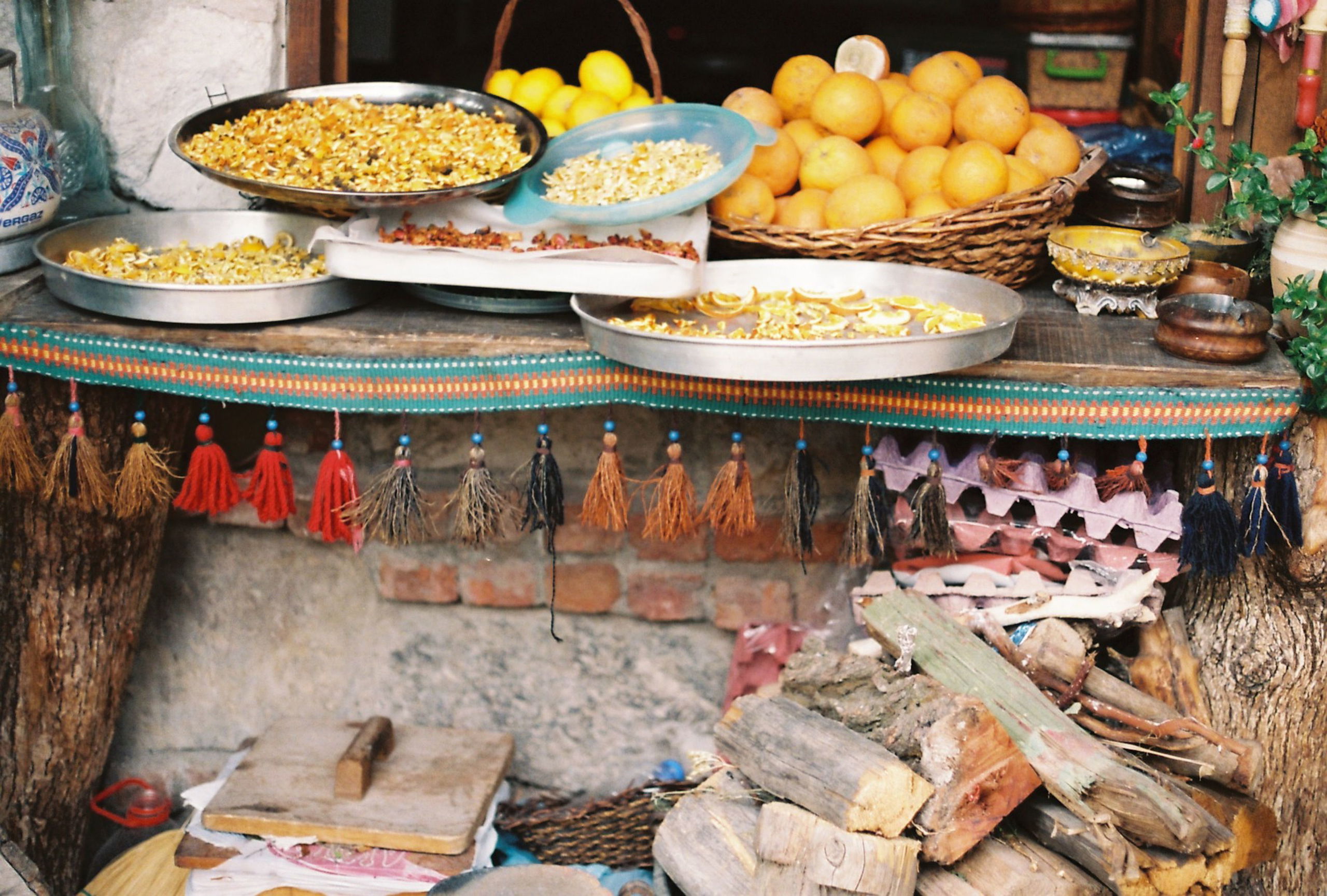
Moroccan preserved lemons are whole lemons cured in salt and their own juices until the peel becomes tender and develops a concentrated, savory citrus flavor. Known in Moroccan Arabic as l’hamd m’rakad, they are a foundational ingredient in traditional Moroccan cuisine, particularly in tagines, salads, and dishes prepared with olives and aromatic spices. Unlike fresh lemons, which contribute sharp acidity, preserved lemons offer a softer, more complex flavor. Their rind becomes fragrant and pleasantly salty, with a subtle bitterness that adds depth to slow-cooked dishes. They are also a window into a larger culinary tradition.
Across Morocco, preservation techniques have long allowed cooks to make use of seasonal ingredients throughout the year. Olives are cured, fruits are dried, and butter is aged into a pungent seasoning called smen. These ingredients are fixtures of Moroccan markets, where the daily business of buying food is inseparable from the knowledge of how it will be prepared.
To understand preserved lemons, it helps to begin in the souk.
Inside the Markets of Marrakech
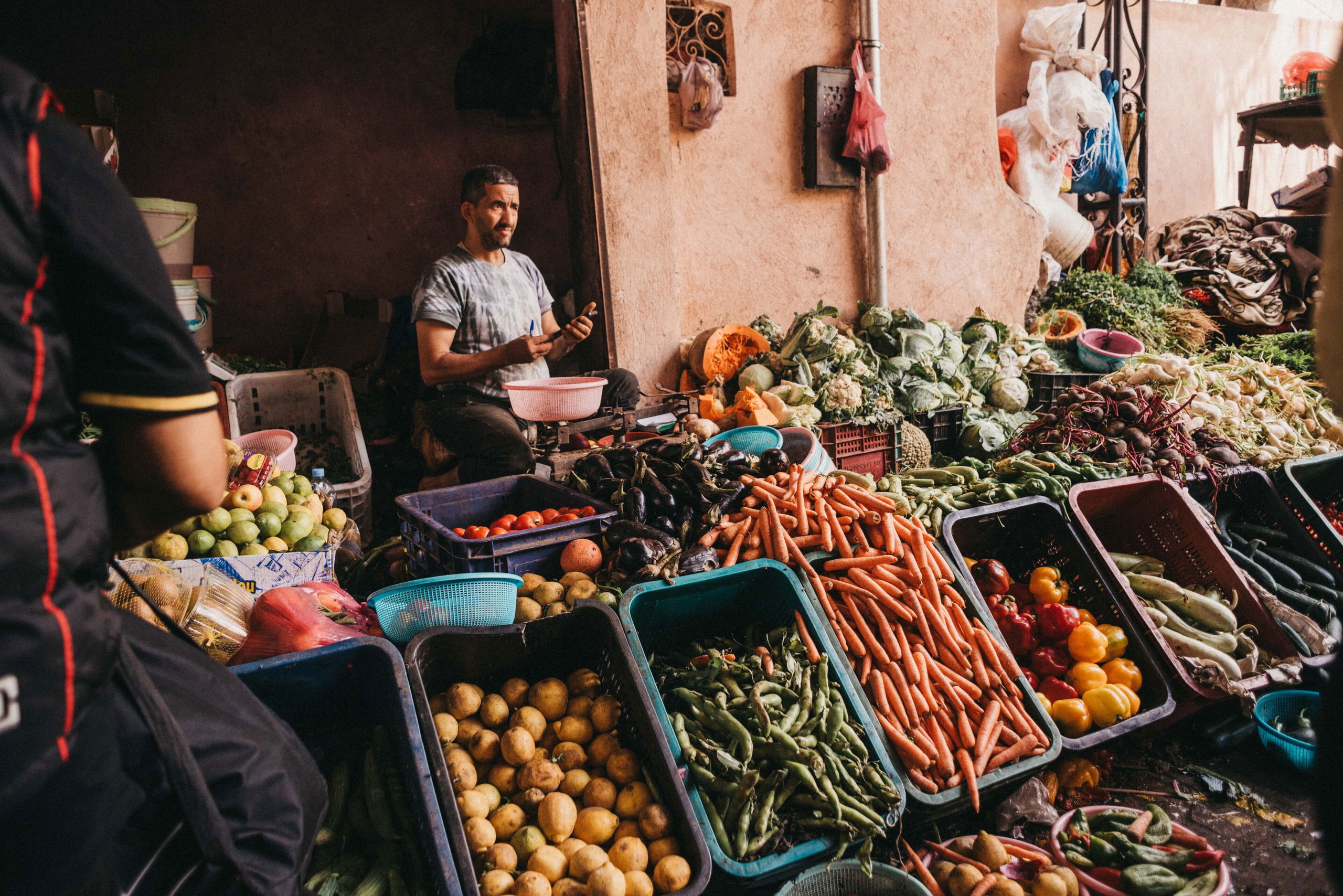
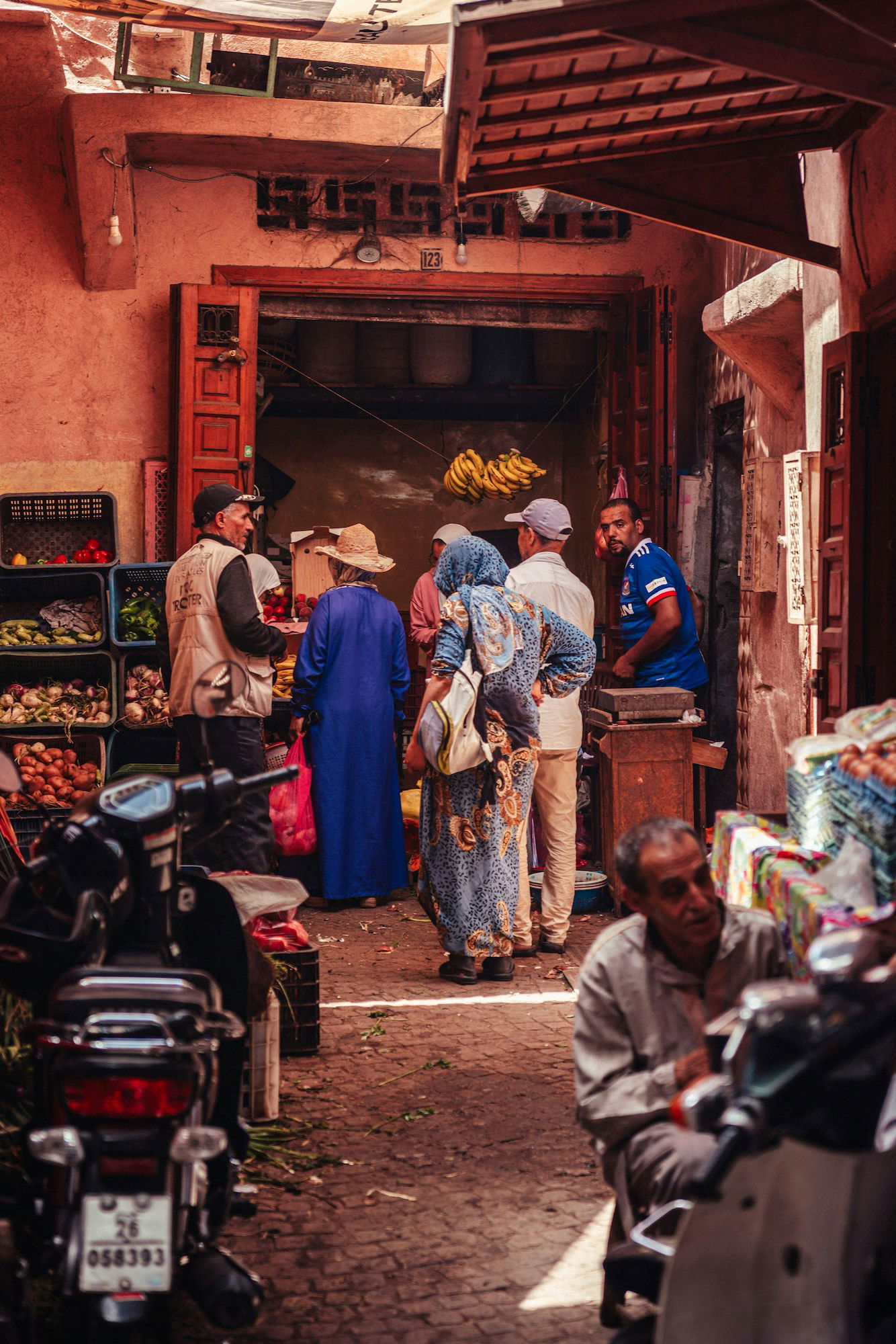
The medina of Marrakech is a network of narrow streets, covered passages, and market squares, where commerce has shaped daily life for centuries.
Near Jemaa el-Fnaa, the city’s famous central square, the souks extend through neighborhoods historically associated with different trades.
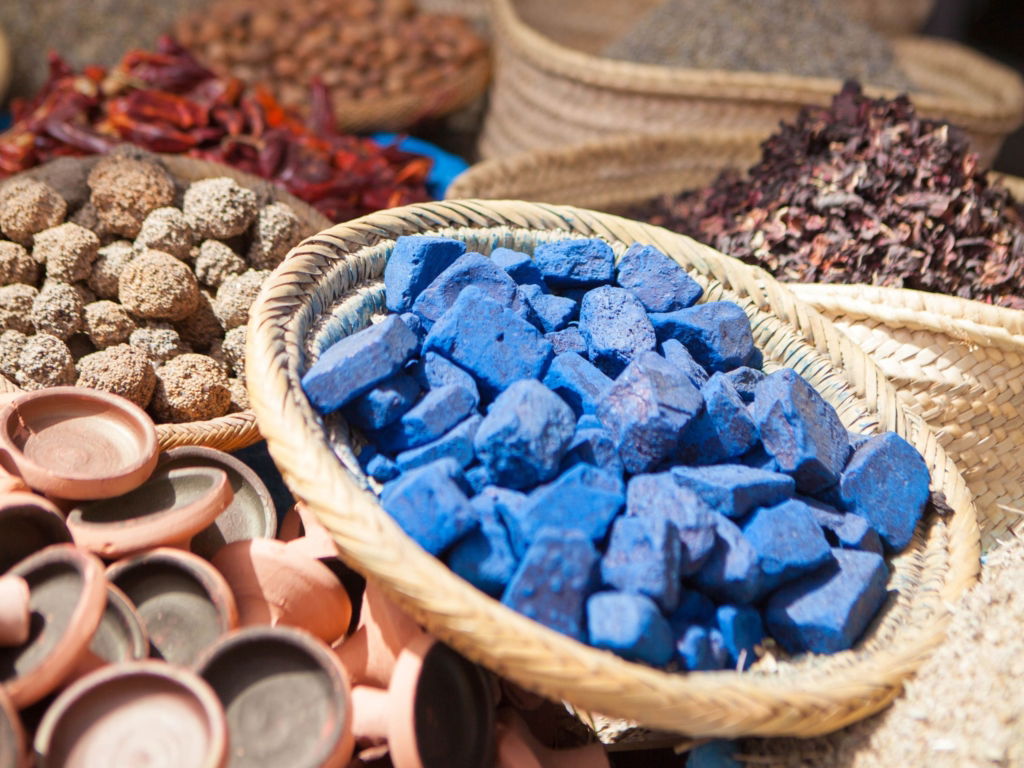
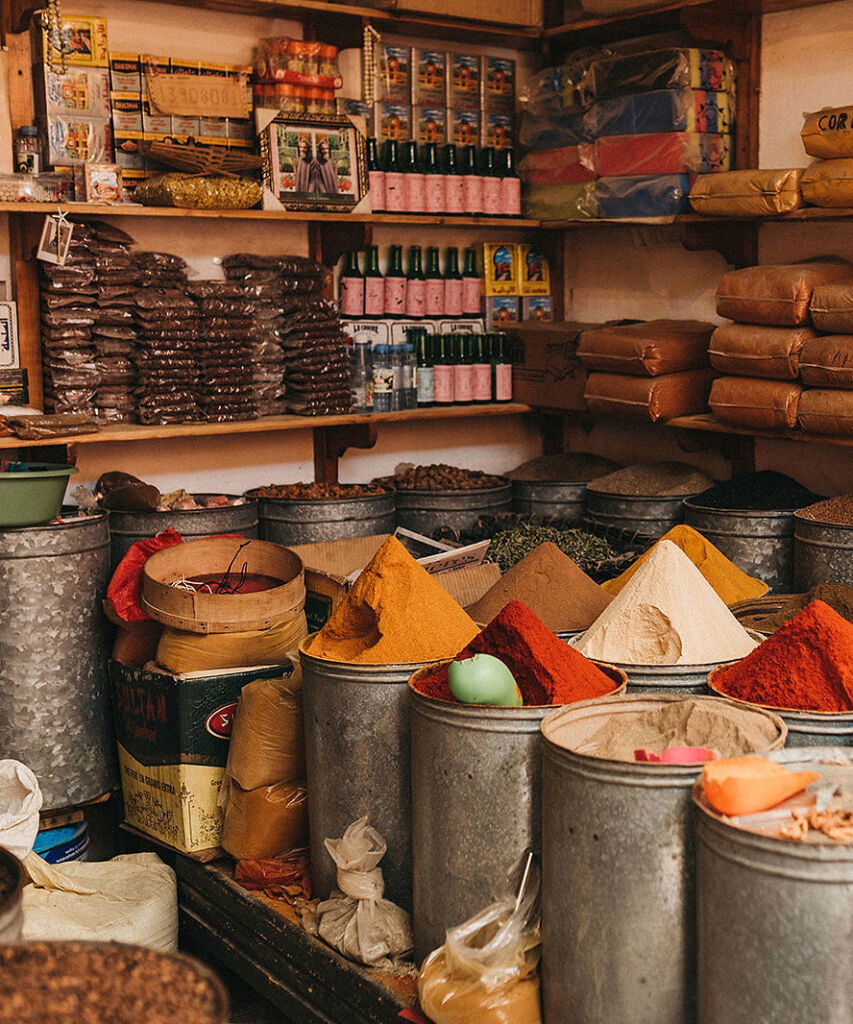
Metalworkers hammer decorative trays. Merchants arrange baskets of dried fruit. In food stalls, olives sit in deep bowls of brine, while bunches of fresh herbs provide a vivid contrast to the warm colors of ground spices. The air changes as one moves between stalls.
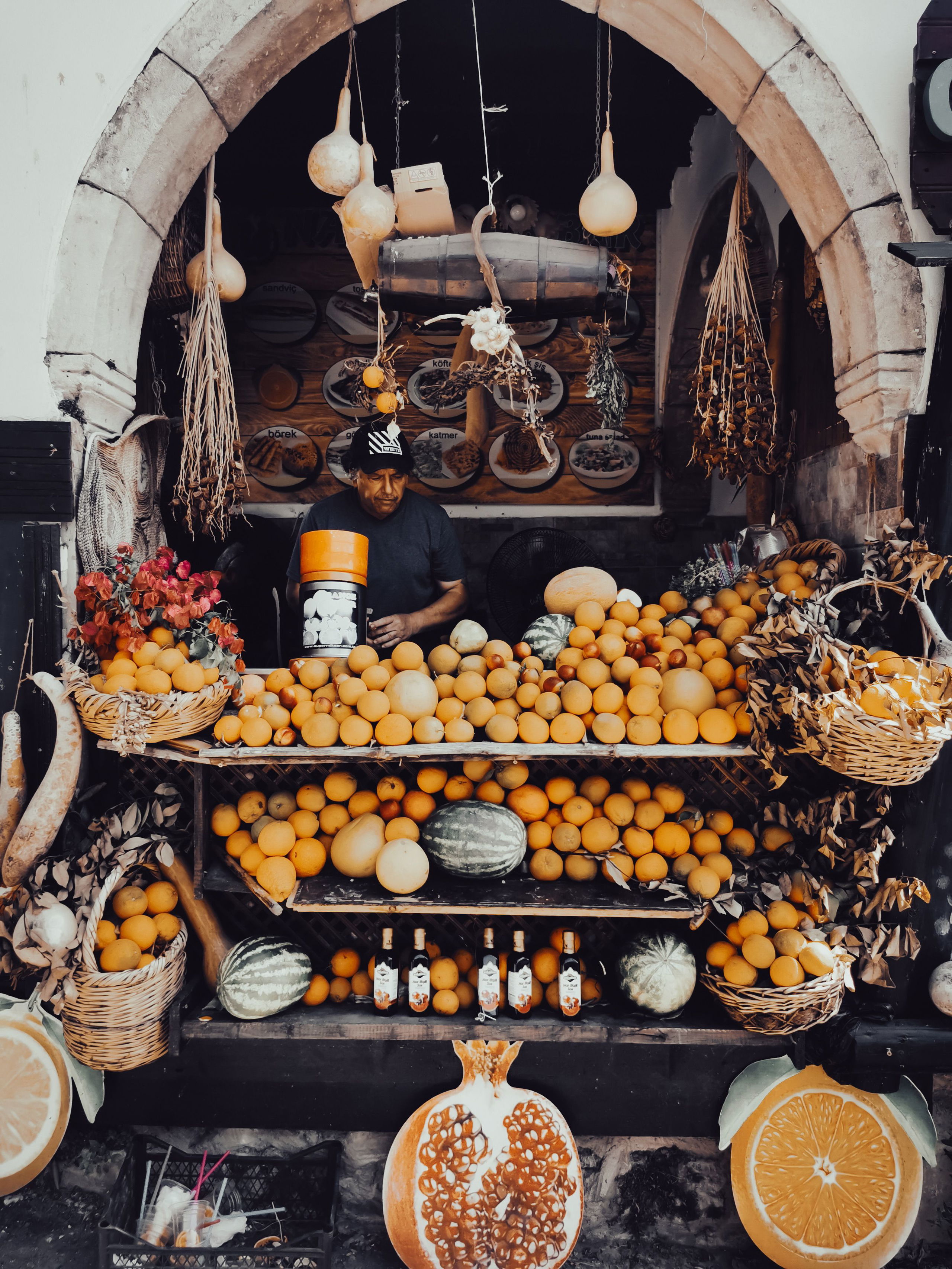
Near a spice merchant, cumin and ginger are immediately recognizable. Farther along, the smell of bread baking in a communal oven may drift into the street. Among the preserved foods, lemons are often piled into containers or submerged in brine. Their skins have softened, their color deepening from bright yellow toward gold.
To someone unfamiliar with Moroccan cooking, they might seem an unlikely object of culinary attention. Yet these lemons are among the ingredients that give Moroccan cuisine its distinctive character.
Why Are Preserved Lemons So Important in Moroccan Cuisine?
Moroccan cooking often relies on the careful balance of contrasting flavors. Sweetness may come from dried fruit or caramelized onions. Warmth and fragrance develop through spices such as ginger, saffron, and cinnamon. Olives contribute salinity and a pleasantly bitter edge. Preserved lemons bring these elements into balance. Their flavor is especially important in djaj mqualli, a traditional preparation of chicken with preserved lemon and olives. In this dish, chicken is slowly cooked with onions, spices, and aromatics until the meat becomes tender and the sauce develops depth. Preserved lemon is added to provide a concentrated citrus character that cuts through the richness of the cooking juices. The olives contribute a second kind of salinity. Together, they create one of the most recognizable flavor combinations in Moroccan cuisine.
Preserved lemons also appear in fish dishes, vegetable preparations, and salads. They can be incorporated into chermoula, a marinade or seasoning mixture commonly made with herbs, garlic, spices, olive oil, and lemon. Their versatility reflects an important characteristic of Moroccan cooking: a relatively small number of carefully prepared ingredients can create considerable complexity.
The History of Preserving Citrus
The practice of preserving lemons belongs to a much older history of food preservation across North Africa and the wider Mediterranean. Before refrigeration, salting and drying were essential methods of extending the usefulness of seasonal ingredients. Preservation helped households manage fluctuations in agricultural production and maintain access to important foods throughout the year.
Citrus cultivation itself has a long and complex history, shaped by the movement of plants and agricultural knowledge across Asia, the Middle East, and the Mediterranean. As citrus fruits became established in North Africa, cooks developed methods for incorporating them into local food traditions.
One early written description of salt-preserved lemons appears in a twelfth-century Arabic treatise attributed to Ibn Jumay, a physician associated with the court of Saladin in Egypt. The technique described bears a striking resemblance to methods still used today: lemons are cut, packed with salt, and left to cure in their own juices. Although the precise origins of Moroccan preserved lemons cannot be assigned to a single place or moment, the continuity of the preparation is remarkable. It is a culinary practice that has endured because it works.
.
What Else Can You Find in a Moroccan Souk?
Preserved lemons are only one part of Morocco’s extensive tradition of preparing ingredients for the pantry. A visit to a food market in Morocco reveals how preservation, agriculture, and regional preferences shape the country’s cooking.
Olives: A Staple of the Moroccan Table
Olive cultivation has deep roots in Morocco, particularly in regions where Mediterranean growing conditions support extensive groves. In markets, olives are sold in an extraordinary variety of preparations. Some are cured in brine. Others are seasoned with herbs, chili, or citrus. Green olives may be firm and pleasantly bitter, while darker varieties offer richer, softer flavors. Olives are served as accompaniments to meals and incorporated into cooked dishes, including tagines. Their importance also extends to olive oil, a foundational ingredient in Moroccan kitchens. In rural communities, the annual olive harvest remains closely connected to agricultural life and family traditions.
Ras el Hanout: The Spice Merchant’s Signature
Few ingredients illustrate the complexity of Moroccan spice culture as clearly as ras el hanout. The name is commonly translated as “head of the shop,” referring to a merchant’s finest or most distinctive blend. There is no single universal recipe. Depending on the merchant and regional tradition, a blend may contain cumin, coriander, ginger, cinnamon, turmeric, pepper, and other spices. Some preparations are relatively restrained, while others are more elaborate. The proportions matter as much as the ingredients themselves. A spice merchant’s blend reflects experience, preference, and an understanding of how different aromas behave when combined. For travelers, the opportunity to smell individual spices before encountering them in a finished dish can offer a new appreciation of Moroccan cooking.
Saffron: A Precious Harvest
Morocco is an important producer of saffron, particularly around Taliouine in the country’s south. Saffron comes from the dried stigmas of Crocus sativus, a flowering plant whose harvest requires extraordinary care. Each flower produces only three red stigmas, which must be collected by hand. The labor involved helps explain saffron’s high value. In Moroccan cuisine, saffron contributes a distinctive aroma and golden color to dishes ranging from rice preparations to slow-cooked meats. Its significance also reflects the relationship between Morocco’s agricultural landscapes and the culinary traditions of its cities.
Smen: The Flavor of Time
Smen is a traditional Moroccan preserved butter, often prepared by salting and aging clarified butter. Its flavor can become increasingly assertive as it matures, developing a characteristic pungency. Small quantities may be used in couscous or other traditional dishes. For cooks unfamiliar with the ingredient, smen can be surprising. Its strength is intentional, the result of a preservation process that transforms a familiar dairy product into a concentrated seasoning. Like preserved lemons, it demonstrates how time can become an ingredient in its own right.
Dried Fruits and Nuts
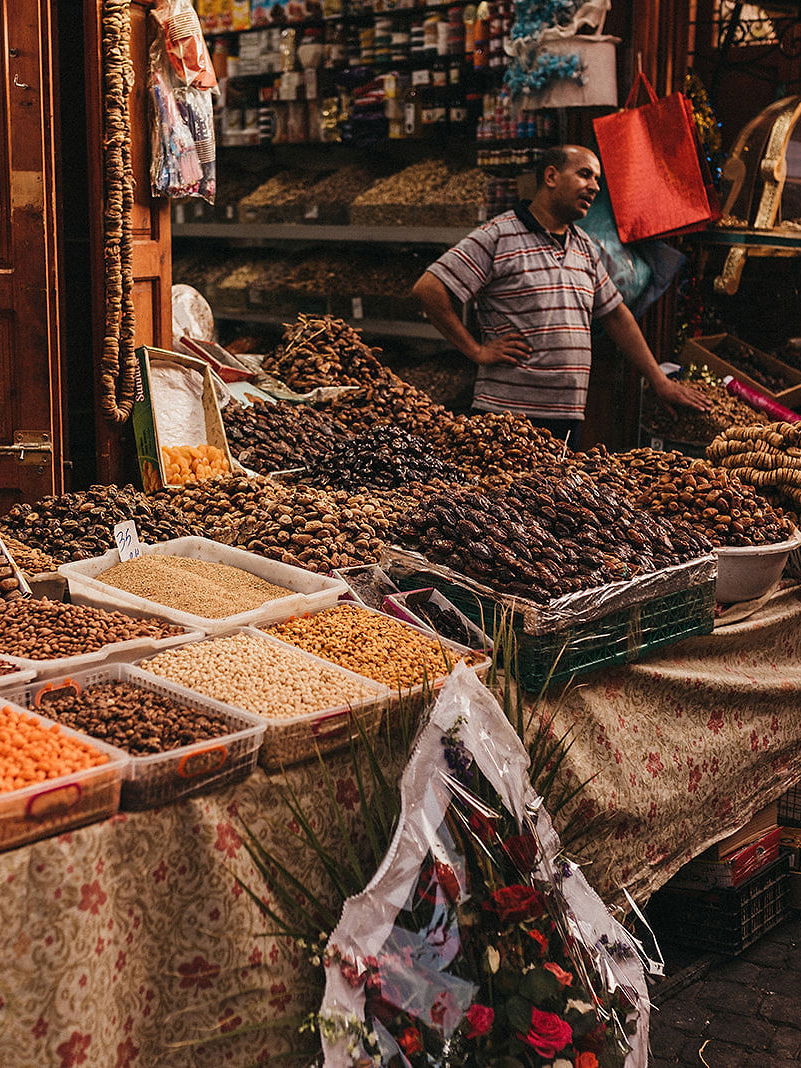
Dried apricots, dates, raisins, almonds, and walnuts are common sights in Moroccan markets. These ingredients reflect the country’s agricultural diversity and its longstanding connections to regional trade. Dates are particularly important in southern Morocco, where oasis agriculture has supported communities for centuries. Dried fruits contribute sweetness to savory dishes, including tagines prepared with lamb or poultry. Almonds appear in pastries and ceremonial dishes, often alongside cinnamon or orange blossom water. Their presence in the market reveals the interplay between everyday cooking and foods prepared for special occasions.
How a Market in Morocco Reflects the Country’s History
Morocco’s markets are products of geography as much as commerce.
For centuries, the country occupied an important position between Mediterranean trade networks, Atlantic routes, and the trans-Saharan exchange of goods.
Caravans transported valuable commodities across the Sahara, connecting North African cities with communities farther south. Trade also moved through Morocco’s coastal ports and across the Strait of Gibraltar, facilitating exchanges with the Iberian Peninsula and the wider Mediterranean. These connections influenced the movement of ingredients, agricultural practices, and culinary ideas. Moroccan cuisine developed through the contributions of Amazigh communities, Arab cultural traditions, Andalusian migration, and other historical influences. Its complexity cannot be reduced to a single origin.
In the souks, that history remains visible through the ingredients themselves. Spices associated with distant trade routes sit beside olives grown in nearby groves. Local bread is sold within walking distance of merchants whose products have traveled considerable distances. The market becomes a record of both local agriculture and centuries of exchange.
The Difference Between a Souk and a Market in Morocco
The word souk refers to a marketplace and is used throughout the Arabic-speaking world. In Morocco, souks may take the form of permanent commercial districts within historic medinas or periodic markets serving rural communities. Urban souks often contain specialized sections devoted to particular trades, including textiles, metalwork, leather goods, and food. Rural markets may operate on designated days, bringing together farmers, merchants, and residents from surrounding villages. Both play important roles in local economic and social life.
For visitors, understanding this distinction offers a more nuanced perspective on Moroccan commerce. A souk is not necessarily a tourist attraction. It is a working marketplace, shaped by the needs of the communities that use it.
Cooking as a Way of Understanding Morocco
The significance of preserved lemons becomes clearest in the kitchen. A cook may remove a piece of rind from the brine, rinse it, and slice it into narrow strips. The quantity is small, but its effect on the finished dish is substantial. The same principle applies to many Moroccan ingredients.
Saffron requires careful handling. A spice blend depends on proportion. The flavor of a tagine develops gradually as its ingredients cook together. These practices are learned through repetition, observation, and the exchange of knowledge between cooks. On our trips to Morocco, we bring travelers into this culinary world through local markets and hands-on cooking experiences. Time in Marrakech includes visiting food markets with a local culinary guide and learning traditional preparations alongside a Moroccan cook. We’ll also venture into the Atlas Mountains, where local ingredients and agricultural traditions offer a different perspective on the country’s cuisine.
For travelers seeking a more personal approach, Modern Adventure’s Private Travel team can design journeys around Morocco’s regional food traditions, artisan communities, and cultural heritage. The experience of a Moroccan market can linger long after the journey ends. Perhaps it is the smell of cumin from a spice stall or the sound of bread being lifted from a communal oven. Or perhaps it is the memory of a preserved lemon, its softened rind carrying the concentrated flavor of a fruit transformed by salt and time.
In Moroccan cooking, such details are never incidental. They are part of the knowledge that gives the cuisine its depth.