
Wine Regions in France: Champagne, Burgundy, & Beyond
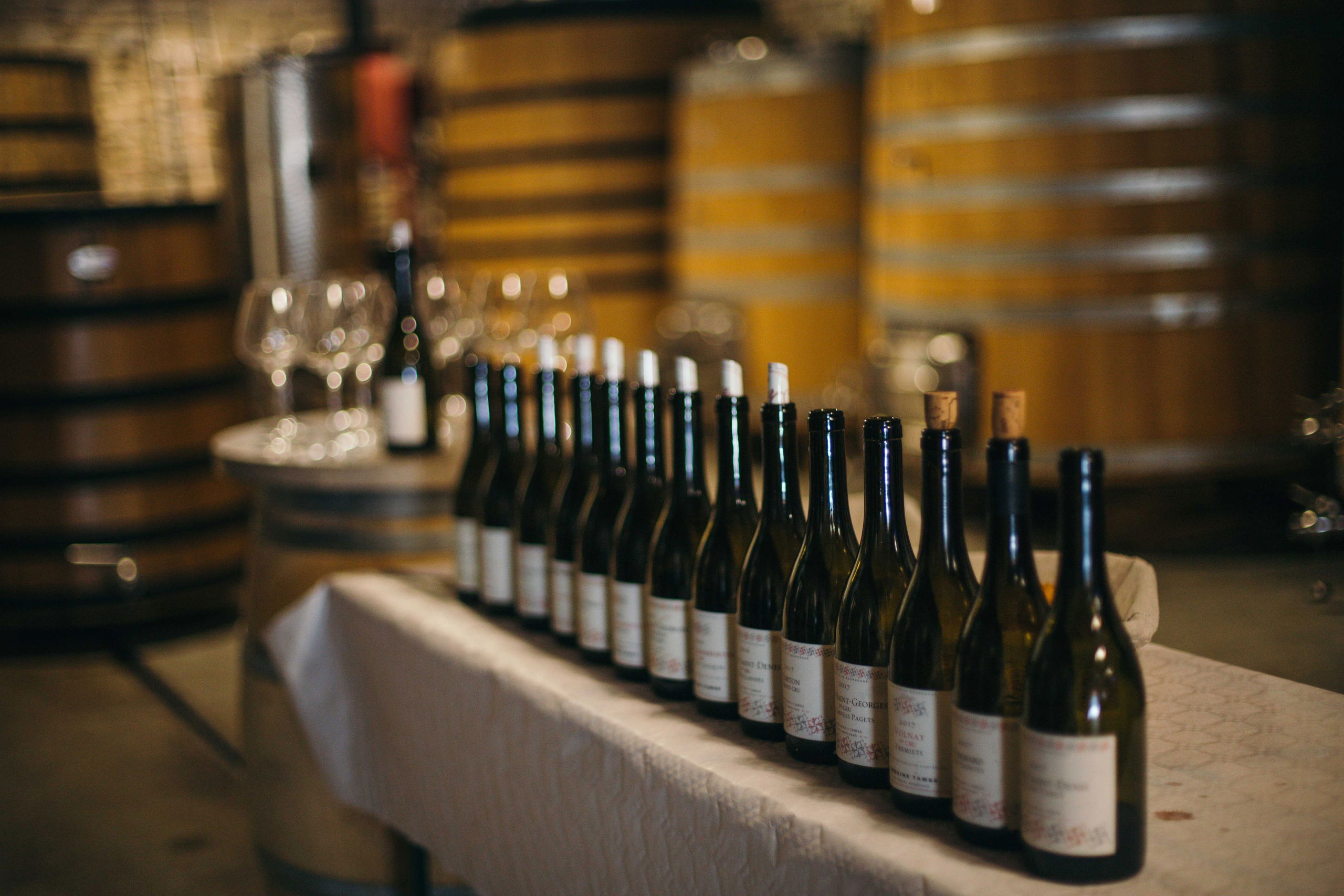
A Traveler’s Guide to the Country’s Great Terroirs
France produces wine in nearly every region of the country, but a few areas define how the world understands French wine: Burgundy, Champagne, Bordeaux, and the Rhône Valley with its southern neighbor Beaujolais. Each region built its reputation on a different relationship between soil, climate, and tradition. Burgundy on the precision of small plots, Champagne on chalk and pressure, Bordeaux on the blending of grapes across a vast estate system, and the Rhône on the steep, sun-warmed slopes that produce some of the country’s boldest reds. Together, they explain why “French wine” is less a single style than a conversation between four distinct landscapes.
Why France Remains the Reference Point for Wine
Walk into a wine shop anywhere in the world and the labeling system on the shelf—by region, not by grape—traces back to France. The country’s appellation d’origine contrôlée system, formalized in the 1930s, ties a wine legally to the place it comes from: the specific hillside, the specific soil, sometimes the specific row of vines. This is not bureaucracy for its own sake. It reflects a conviction that has shaped French winemaking for centuries that a wine is an expression of where it was grown, not simply a product of a grape variety.
That conviction is also what makes a trip through these regions so different from a typical tasting room circuit. In Burgundy, a few hundred meters of slope can separate two wines that taste nothing alike. In Champagne, chalk cellars dug by Romans still hold bottles aging in the dark. In Bordeaux, château families have negotiated harvest decisions across five generations. This is wine as inheritance, and visiting it properly means slowing down enough to taste the difference a hillside makes.
Burgundy: Patchwork of a Single Grape
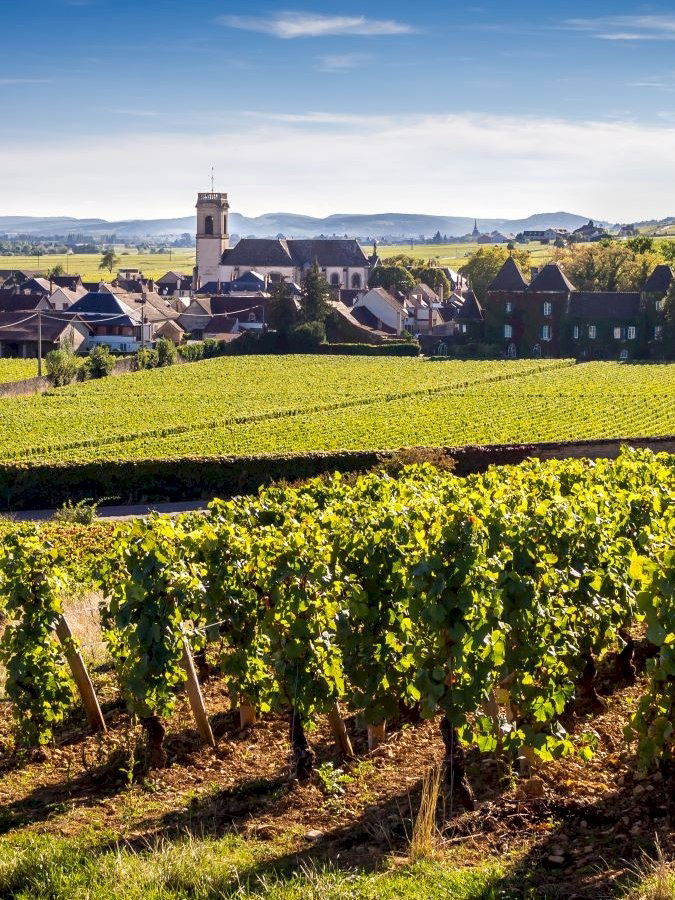
Burgundy, or Bourgogne, lies south of Paris along a narrow limestone ridge that runs roughly forty miles from Dijon to Mâcon. Unlike Bordeaux, where blending several grape varieties is standard practice, Burgundy is built almost entirely on two: Pinot Noir for red, Chardonnay for white. The region’s complexity comes not from the grape but from the land beneath it. The Côte d’Or (the “golden slope”) is divided into more than a thousand individually classified plots, or climats, some no larger than a city block. Two vineyards separated by a dirt path, both planted with Pinot Noir, both farmed by careful hands, can produce wines with entirely different characters. This is terroir in its most literal form, and Burgundian winemakers will speak about a single hillside the way a geologist speaks about strata.
A morning in the village of Vosne-Romanée, walking past stone walls that mark some of the most sought-after vineyard boundaries on earth, makes the abstraction of “terroir” suddenly concrete. The soil changes color underfoot. The pitch of the slope shifts. A grower will point to a low stone wall, no higher than a knee, and explain that it separates one of the most expensive parcels of land in the world from a perfectly good, far more affordable neighbor.
Champagne: The Discipline Beneath the Celebration
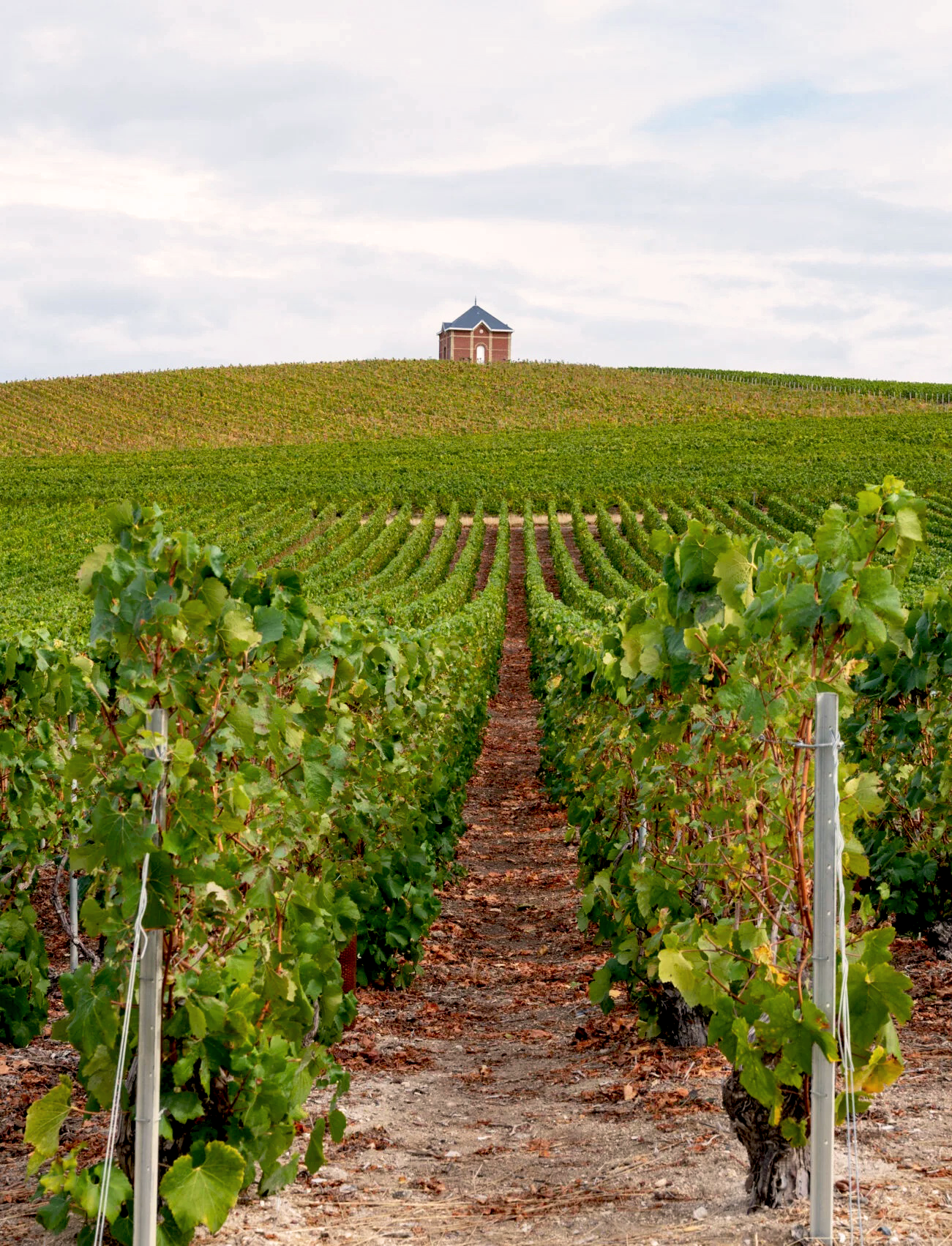
An hour and a half northeast of Paris, Champagne owes its identity to chalk. The region sits atop a deep bed of porous limestone left behind by an ancient seabed. That chalk drains water away from the vine roots after rain, preventing rot in a famously damp climate, and it holds heat, releasing it slowly back to the vines at night. Beneath towns like Reims and Épernay, miles of chalk tunnels, some originally cut by Gallo-Roman quarrymen, now serve as cellars, holding millions of bottles at a constant, cool temperature as they age through their second fermentation.
That second fermentation is the technical heart of Champagne. A still base wine is bottled with a small amount of sugar and yeast, sealed, and left to ferment again inside the bottle itself, trapping the carbon dioxide that becomes the wine’s signature bubble. The process, refined over the seventeenth and eighteenth centuries by winemakers including the Benedictine monk Dom Pérignon, takes patience measured in years, not weeks. Standing in a cellar where racks of bottles are turned by hand, a fraction of an inch at a time, to keep the sediment moving correctly toward the cork, it becomes clear that the celebration on the surface rests on a discipline that rarely gets toasted.
Bordeaux: The Architecture of the Blend
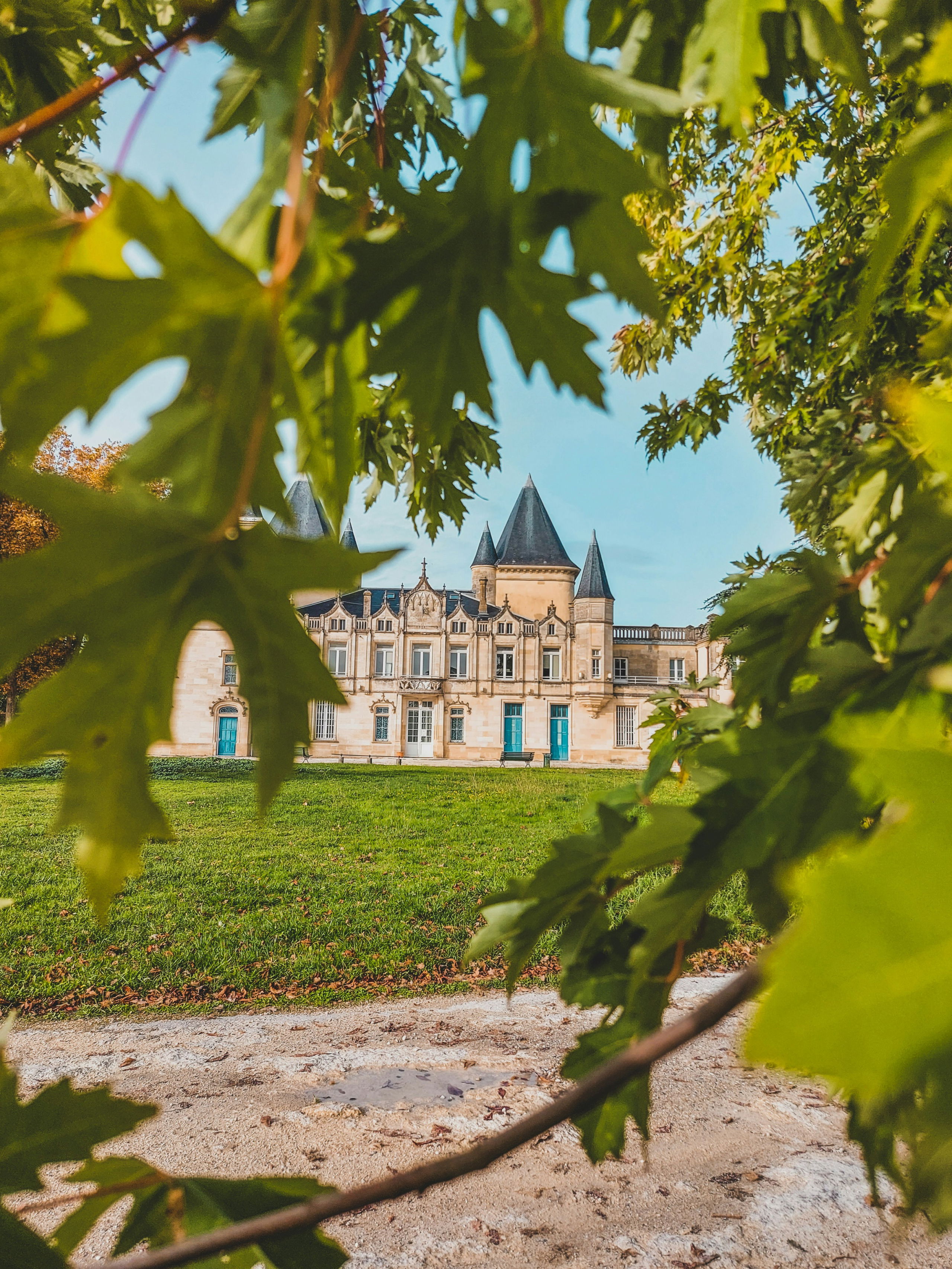
Bordeaux, on France’s Atlantic coast, built its reputation on scale and on blending. Where Burgundy isolates a single grape to let the land speak, Bordeaux combines several—primarily Cabernet Sauvignon, Merlot, Cabernet Franc, and Petit Verdot—to balance structure, fruit, and aromatics within a single bottle. The Gironde estuary splits the region into the Left Bank and Right Bank, and the gravel-heavy soils of the Left Bank, around Médoc and Pessac-Léognan, tend to favor Cabernet Sauvignon’s tannic backbone, while the clay and limestone of the Right Bank, around Saint-Émilion and Pomerol, favor Merlot’s softer fruit. The result is two distinct regional styles within a single appellation system, and a tasting that moves from one bank to the other can feel like tasting two different countries.
The 1855 Classification, drawn up for the Exposition Universelle de Paris and ranking the top châteaux of the Médoc, still shapes the region’s hierarchy today, a rare case of a marketing exercise from the nineteenth century calcifying into permanent law. A visit to a Right Bank estate in Saint-Émilion, a UNESCO World Heritage town built into limestone cliffs, pairs that history with something more immediate: the smell of damp limestone cellars carved directly into the hillside, used for storage since the Middle Ages, long before anyone thought to rank a wine at all.
Rhône Valley and Beaujolais: Granite, Schist, and the Gamay Exception
South of Burgundy, the Rhône Valley splits into a Northern and Southern half with almost nothing in common beyond the river that runs through both. The north is steep and narrow, with vineyards like Hermitage and Côte-Rôtie planted on granite slopes so severe that some are worked entirely by hand, the vines trained on wooden stakes because no machine can manage the incline. Syrah dominates here, producing reds dense with black pepper and smoked meat character. The south opens into wide, sun-baked terrain around Châteauneuf-du-Pape, where round, fist-sized stones called galets roulés cover the vineyard floor, absorbing heat during the day and radiating it back to the vines after dark, helping ripen the Grenache-based blends grown there.
Just north of Lyon, Beaujolais occupies its own category, built on granite and schist hillsides and devoted almost entirely to a single grape that Burgundy rejects: Gamay. Long dismissed by comparison to its Pinot Noir neighbor, Beaujolais has spent the last two decades earning serious reconsideration, particularly its ten crus—Morgon, Moulin-à-Vent, Fleurie among them—which produce wines with real structure and aging potential, a far cry from the simple, fruity reputation the region’s name once carried.
France’s Broader Wine Map
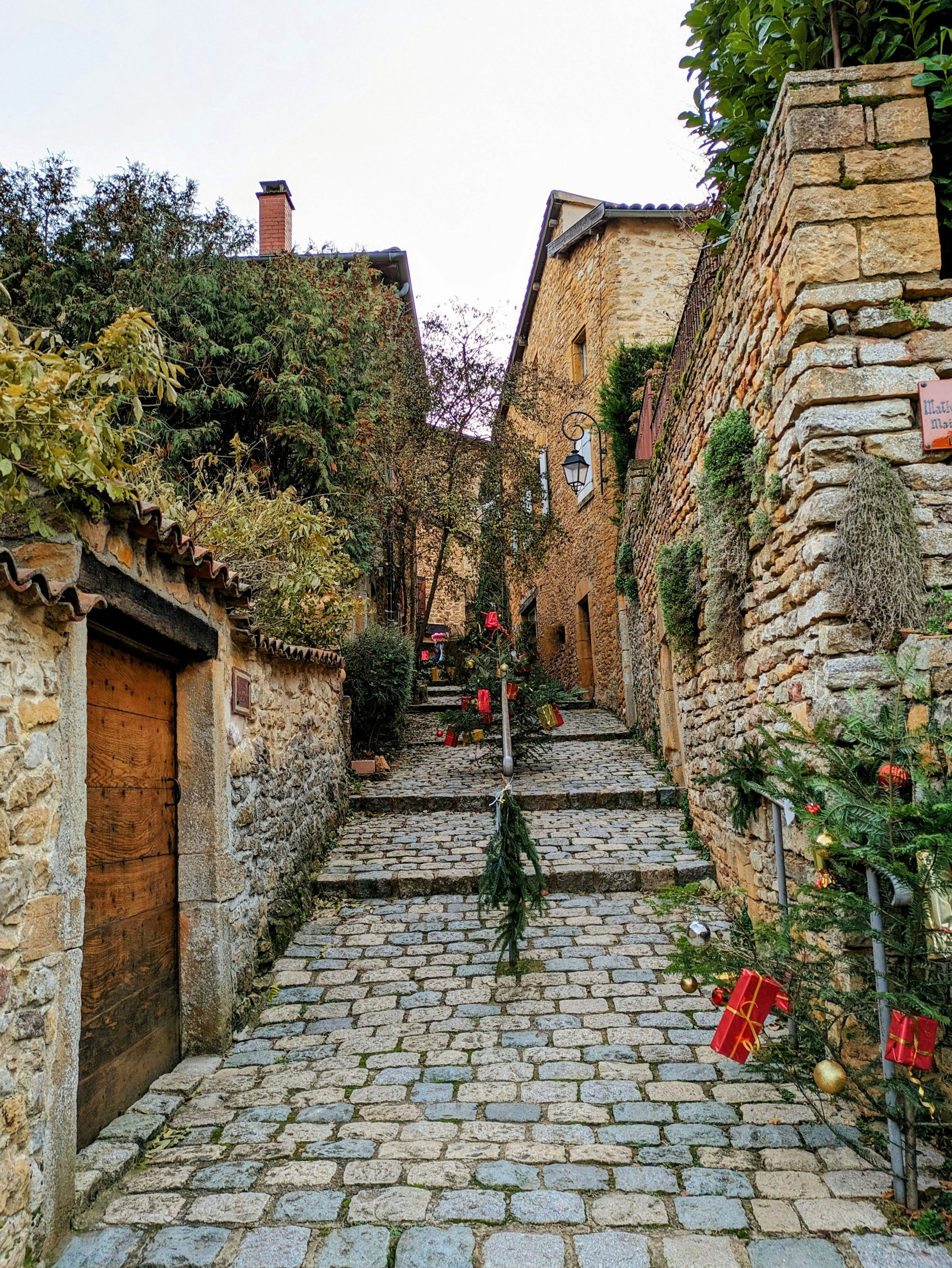
Burgundy, Champagne, Bordeaux, and the Rhône do not constitute the whole of France’s wine country, even if they anchor its reputation. Alsace, pressed against the German border beneath the Vosges mountains, breaks from the rest of France by favoring aromatic white grapes like Riesling and Gewürztraminer, grown in half-timbered villages that look as Germanic as they do French. The Loire Valley, threaded with Renaissance châteaux, produces some of the country’s most食 sought-after whites, including the flinty Sauvignon Blanc of Sancerre and the honeyed, age-worthy Chenin Blanc of Vouvray. Languedoc-Roussillon, sprawling along the Mediterranean coast, is in fact France’s largest wine-producing region by volume, even if it carries less prestige than its northern neighbors. And Provence, just east, has built an entire identity around pale, dry rosé, inseparable from the lavender fields and seaside lunches that define the region’s culinary culture. Each deserves its own exploration. But for the regions we return to again and again, building trips around the growers and cellars we know best, four remain the heart of the story: Burgundy, Champagne, Bordeaux, and the Rhône.
Tasting the Difference Between Knowing and Understanding
It is possible to learn the facts of French wine from a book: the grapes, the classifications, the vintages worth seeking out. It is a different thing entirely to stand in a Côte d’Or vineyard and feel the soil change under your boots within fifty paces, or to watch a cellar master in Champagne explain, by hand and by instinct, how a bottle knows when it is ready. Our trips through France are built around that distinction through time spent with the growers, blenders, and cellar masters who can explain not just what a wine tastes like, but why.
This way of traveling is designed for those who want the second kind of knowledge: the kind that comes from a glass in hand, in the place the wine was made.

Experience the wine regions of France


