
The Origins of Vietnamese Egg Coffee & the Coffee Culture in Vietnam
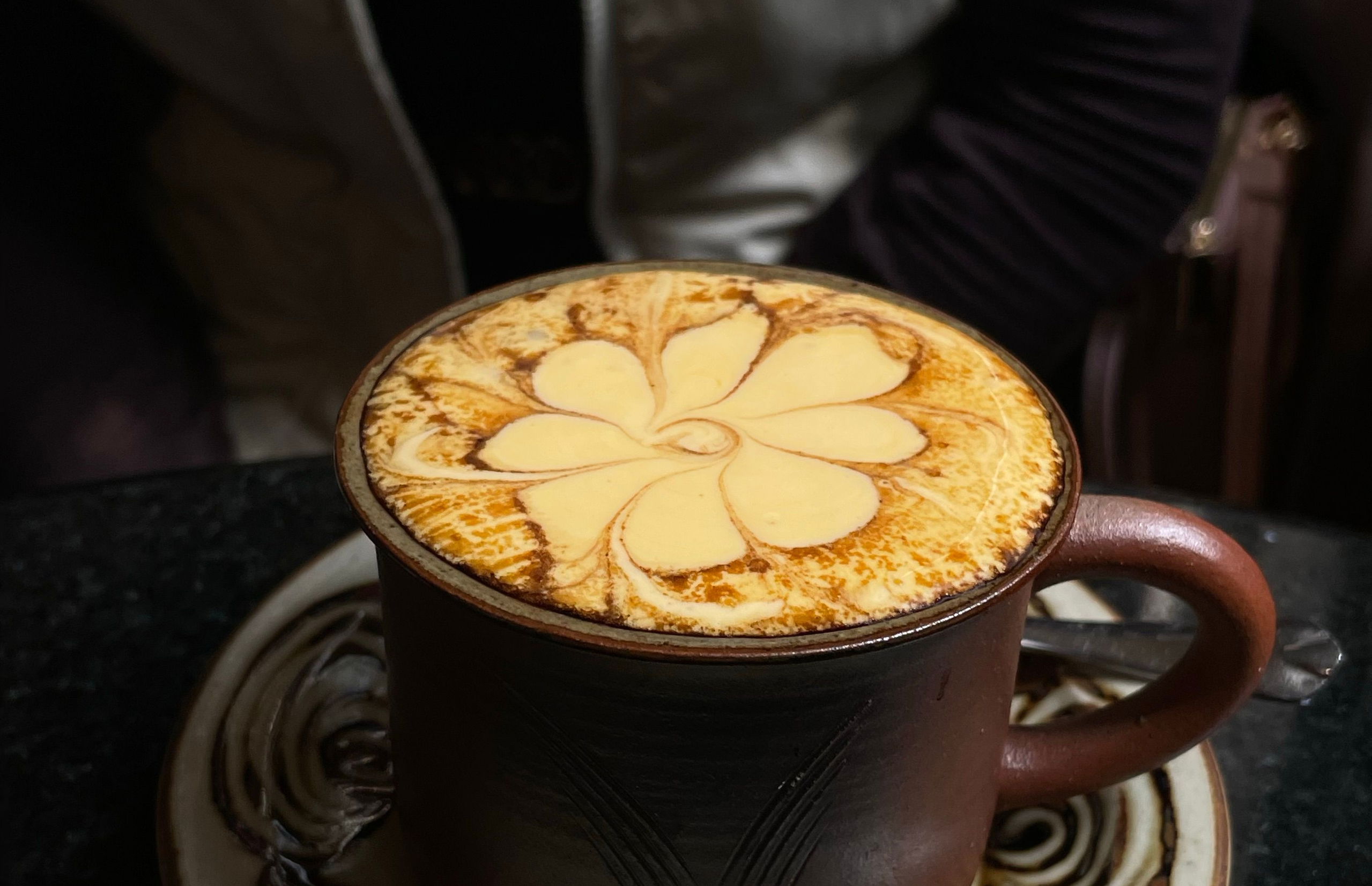
In a Hanoi café, a small cup of coffee tells a story of French colonial influence, wartime scarcity, and one family’s enduring culinary invention.
Vietnamese egg coffee, known as cà phê trứng, is a traditional Hanoi drink made by combining strong Vietnamese coffee with a rich, whipped mixture of egg yolk and sugar, often sweetened with condensed milk. The result is a distinctive contrast between intensely flavored coffee and a velvety, custard-like cream. The drink is widely credited to Nguyễn Văn Giảng, a bartender working at Hanoi’s Metropole Hotel in 1946. During a period when fresh milk was difficult to obtain, Giảng experimented with egg yolks as an alternative, creating a preparation that would eventually become one of the city’s most recognizable culinary traditions.
Nearly eight decades later, Vietnamese egg coffee remains closely associated with Hanoi. Its story offers a perspective on the history of Vietnamese coffee culture, where imported ingredients and foreign customs were gradually adapted into something distinctly local.

A Coffee Tradition Born of Necessity
The origins of Vietnamese egg coffee are inseparable from the history of Hanoi during the mid-twentieth century. In the 1940s, Vietnam was experiencing profound political and economic upheaval.
Japanese occupation during World War II, the collapse of French colonial authority, and the struggle for Vietnamese independence disrupted everyday life. Food shortages and limited access to imported products affected households and businesses alike. Fresh milk was among the ingredients that could be difficult to obtain.
For Nguyễn Văn Giảng, who worked at the Metropole Hotel in Hanoi, this scarcity presented a culinary challenge. The hotel, established in 1901, was an important institution in French colonial Hanoi. Its dining rooms and bars reflected European hospitality traditions, including the preparation of coffee with milk.
According to the Giảng family, Nguyễn Văn Giảng began experimenting with whipped egg yolks as a substitute for the dairy normally used in coffee drinks. The mixture produced a thick, creamy topping that complemented the bitterness of strong coffee.
What began as an adaptation to limited resources became a distinctive beverage in its own right. In 1946, Giảng established the café that would carry his name. Café Giảng remains an important part of Hanoi’s coffee culture, with the family’s descendants continuing the tradition.
How French Colonialism Influenced Vietnamese Coffee Culture
Coffee was introduced to Vietnam during the French colonial period in the nineteenth century. French missionaries and colonial enterprises helped establish coffee cultivation, which eventually expanded into an important agricultural industry. Vietnam’s climate proved particularly suitable for coffee production, especially in the Central Highlands. Over time, robusta coffee became a major part of the country’s agricultural economy.
Compared with arabica, robusta generally produces a stronger, more bitter cup, with a fuller body and higher caffeine content. These characteristics helped shape the development of Vietnamese coffee preparations. French colonial influence also introduced European café customs, although Vietnamese consumers gradually adapted them to local preferences and available ingredients. One particularly important adaptation involved sweetened condensed milk.
Fresh dairy products were difficult to distribute and store in Vietnam’s tropical climate, particularly before widespread refrigeration. Canned condensed milk offered a practical alternative. Its sweetness also balanced the pronounced bitterness of robusta coffee. The combination became central to cà phê sữa, Vietnamese coffee with milk, and later to iced preparations such as cà phê sữa đá. Egg coffee emerged within this broader history of adaptation. Its ingredients reflect the meeting of imported coffee culture with local ingenuity, shaped by the economic realities of a particular historical moment.
Café Giảng: Where Vietnamese Egg Coffee Began
Café Giảng occupies a distinctive place in Hanoi’s culinary history. Founded by Nguyễn Văn Giảng in 1946, the business became closely associated with the drink he is credited with creating. Today, the café on Nguyễn Hữu Huân Street in Hanoi’s Old Quarter remains a destination for people interested in the origins of cà phê trứng.
The setting is part of its appeal. Hanoi’s Old Quarter is a dense network of streets shaped by centuries of commerce and urban life. Historically, many streets were associated with particular trades, a legacy still reflected in names such as Hàng Bạc, or Silver Street. The neighborhood’s architecture tells a layered story of Vietnamese urban traditions and French colonial influence. Narrow buildings rise above shopfronts, their balconies overlooking streets crowded with motorbikes and pedestrians.
Within this environment, Café Giảng preserves a family tradition that has outlived the circumstances of its invention. The café’s continued popularity reflects the importance of culinary memory. A recipe developed in response to scarcity has become part of the city’s identity, passed between generations and shared with new audiences.
Hanoi’s Historic Café Culture
Although egg coffee is closely associated with Café Giảng, Hanoi’s coffee culture extends across a network of historic establishments. Café Đinh, near Hoàn Kiếm Lake, is another well-known address connected to the Giảng family. Its location above street level offers a different perspective on the city. Nearby, Hoàn Kiếm Lake has long served as an important public space, where residents gather for morning exercise, conversation, and evening walks. The surrounding streets contain a mixture of longstanding businesses and contemporary cafés.
Café Lâm is another historic Hanoi establishment, associated with the city’s artistic and intellectual life. During the twentieth century, cafés provided informal meeting places for writers, painters, and other members of Hanoi’s cultural community. These establishments became spaces where ideas circulated alongside coffee.
The association between cafés and creative life is hardly unique to Vietnam, but Hanoi’s examples reflect the particular circumstances of the city’s history. They are places where everyday rituals intersect with artistic expression and political change. For visitors, time spent in a traditional café offers an opportunity to observe this relationship.
The setting often communicates as much as the menu.
.
Why Is Egg Coffee Associated With Hanoi?
Vietnamese coffee culture varies considerably by region. In Ho Chi Minh City and other parts of southern Vietnam, iced coffee preparations are particularly prominent, reflecting both local preferences and the warmer climate. Hanoi’s coffee traditions developed within a different historical and cultural environment. The city’s cooler winter months make hot coffee especially appealing, while its longstanding café establishments have helped preserve particular preparations.
Egg coffee’s association with Hanoi is also rooted in the history of the Giảng family. The drink originated there and became established through local businesses before spreading to other Vietnamese cities. Today, egg coffee can be found throughout Vietnam and in cafés internationally. Contemporary variations may include chocolate, matcha, or other ingredients. Some establishments serve iced versions, while others experiment with different coffee beans or sweeteners. Yet the classic Hanoi preparation remains the reference point. Its identity is tied to the city where it was first developed.
Coffee as a Reflection of Vietnamese History
Vietnam is now one of the world’s largest coffee-producing countries, with coffee cultivation playing a significant role in its agricultural economy. The industry’s development has involved substantial changes in land use, agricultural policy, and international trade. Much of the country’s coffee is grown in the Central Highlands, where robusta production expanded considerably during the late twentieth century. The relationship between coffee and Vietnamese society is therefore much larger than the café. It connects agricultural communities with urban consumers and international markets.
Coffee also reflects Vietnam’s complex historical relationship with colonialism. An imported crop and European beverage custom became deeply integrated into Vietnamese life, acquiring local preparations and meanings. Egg coffee is one particularly memorable expression of that process. Its origin story is often told as an example of ingenuity during hardship, but the drink’s endurance suggests something more. It became part of the everyday culture of Hanoi because people continued to make it, serve it, and return to it. The original necessity eventually disappeared. The tradition remained.
For travelers interested in understanding Vietnam through its food, these encounters offer a valuable perspective. Modern Adventure’s journeys through Vietnam connect regional cuisine with the people and traditions that sustain it. In northern Vietnam, Hanoi’s markets and culinary culture provide an especially compelling introduction to the country’s history.
Our Private Travel team can also design personalized journeys through Vietnam, incorporating historic neighborhoods, local culinary specialists, and experiences that reflect each traveler’s interests.
The story of Vietnamese egg coffee began with a practical question in a hotel kitchen nearly eighty years ago. Today, the answer is still served in small cups across Hanoi. Beneath a layer of pale, whipped cream sits strong Vietnamese coffee, its bitterness softened by an invention born of necessity.
The ingredients are simple. The history they carry is anything but.


