
The Art of Tinned Fish in Portugal

Inside a small metal tin lies a history of Atlantic fishing communities, industrial craftsmanship, and a distinctly Portuguese appreciation for the sea.
Portuguese tinned fish, known as conservas, is a longstanding culinary tradition rooted in the country’s Atlantic fishing industry. Sardines, tuna, mackerel, and other seafood are carefully prepared and preserved in olive oil, brine, or seasoned sauces. What began as a practical means of extending the life of the daily catch has become one of Portugal’s most recognizable culinary specialties.
Today, the finest conservas are appreciated for their quality, craftsmanship, and connection to the coastal communities that produce them. A well-made tin of sardines might contain little more than fish, olive oil, and salt. The pleasure comes from the quality of those ingredients and the care taken in preparing them.
Across Portugal, tinned fish occupies an unusual position in the national food culture. It belongs as comfortably in a home pantry as it does on the table of a wine bar, where a tin might be opened beside a glass of vinho verde and a basket of bread. Its history, however, begins long before the decorative packaging and specialty shops that have brought Portuguese conservas to international attention.

A Country Shaped by the Atlantic
Portugal’s relationship with the sea has influenced its cuisine for centuries. Along the country’s western coast, fishing communities developed around the seasonal movement of fish through Atlantic waters. Sardines became particularly important, providing a valuable source of food and income for generations of coastal families.
Fresh sardines remain central to Portuguese culinary identity. During summer, the smell of sardines cooking over charcoal drifts through neighborhoods in Lisbon and Porto. Their association with the popular saints’ festivals, particularly Lisbon’s celebrations of Santo António in June, has made them an enduring symbol of Portuguese food culture.
Yet fresh fish presents an obvious challenge: its quality begins to deteriorate soon after it is caught.
Before modern refrigeration, coastal communities relied on methods such as salting and drying to preserve their catch. These practices allowed seafood to travel beyond fishing ports and remain available when boats could not go to sea. The development of commercial canning introduced another possibility. Fish could be preserved in sealed containers, transported across considerable distances, and stored for extended periods.
For Portugal, this innovation would become the foundation of a major industry.
The History of Tinned Fish in Portugal
The modern canning process emerged in Europe during the early nineteenth century, following experiments in food preservation by the French inventor Nicolas Appert. The technique spread as governments and commercial enterprises recognized its usefulness for feeding armies, supplying ships, and transporting perishable foods.
Portugal’s fish-canning industry developed during the middle of the nineteenth century, taking advantage of the country’s established fishing economy and access to Atlantic waters. Setúbal, south of Lisbon, became one of the industry’s earliest and most important centers. The city’s sardine-canning industry began in the 1850s and expanded dramatically over the following decades. By the early twentieth century, Setúbal was a major producer of canned fish, with factories employing thousands of workers. Other coastal communities developed their own industries.
Matosinhos, near Porto, became closely associated with fish processing. Farther south, Portimão and Olhão emerged as important centers of Algarve canning. Factories were often located near fishing harbors, allowing the day’s catch to move quickly from boats to processing tables. The industry connected Portugal’s coastal economy to international markets. Tins of sardines and other seafood traveled to European cities and overseas destinations, becoming an important Portuguese export. But behind the success of the industry was an enormous amount of physical labor.
The Women Behind Portugal’s Canning Industry
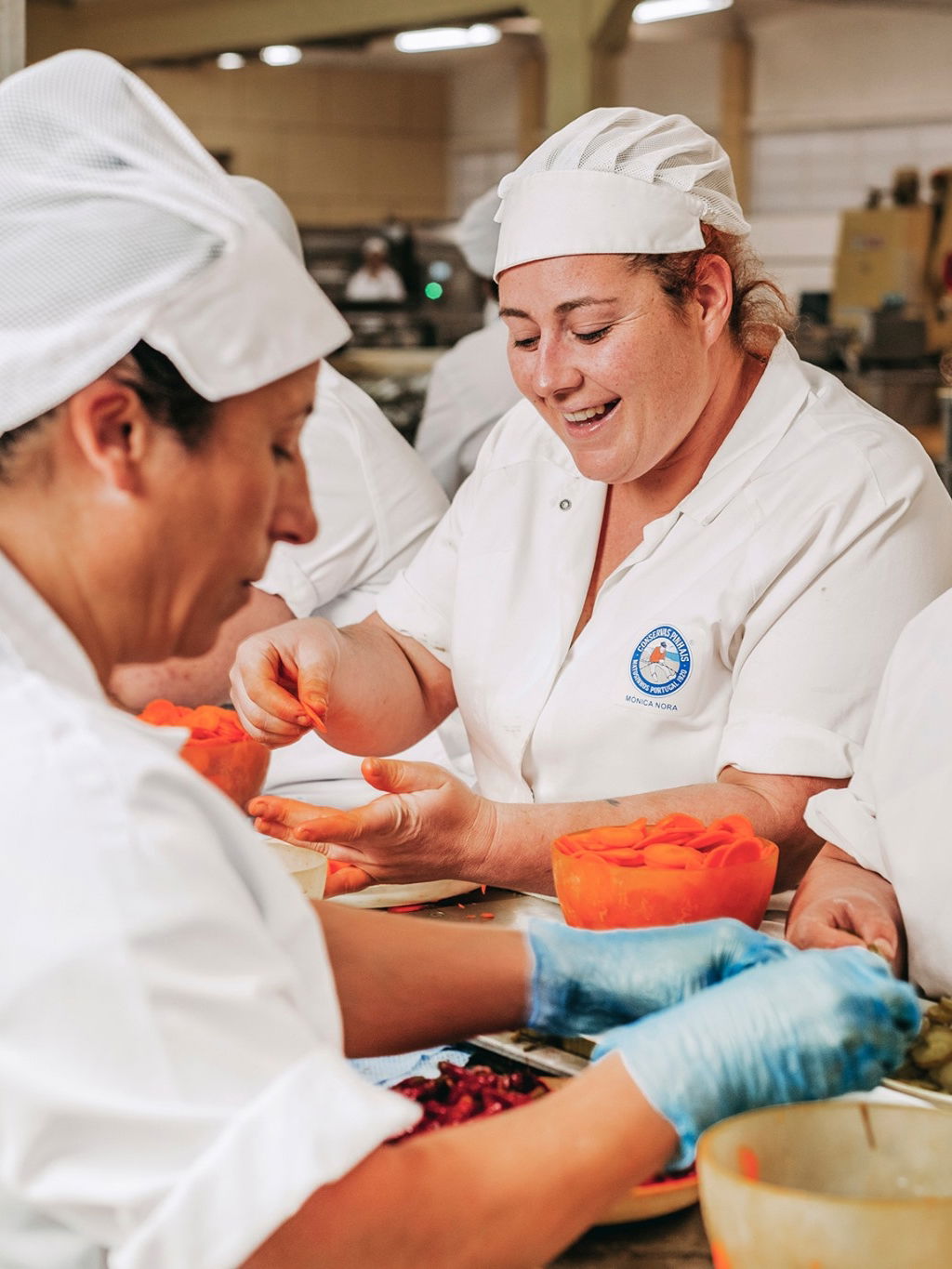
The history of Portuguese conservas is also a history of women’s work.
In many canning communities, men worked aboard fishing vessels while women formed a substantial part of the factory workforce.
Their responsibilities included cleaning fish, removing heads and entrails, arranging the prepared fish inside tins, and overseeing various stages of production. The work demanded speed and precision. In factories where production followed the arrival of fishing boats, working hours could be unpredictable. A large catch meant long periods of processing before the fish lost its freshness.
Women often balanced factory employment with responsibilities at home, contributing significantly to the economic survival of fishing families.
The industrial buildings that once lined Portugal’s waterfronts tell part of this story.
In Portimão, the Museu de Portimão occupies a former fish-canning factory and preserves the history of the local industry. Its exhibits examine the machinery, labor, and economic changes that shaped the region.
In Setúbal, the Museu do Trabalho Michel Giacometti also documents aspects of the city’s industrial and working-class heritage. These institutions offer a perspective that can be easy to overlook when admiring a beautifully illustrated tin in a contemporary specialty shop.
The product’s history belongs to the workers who made it possible.
.

Sardines, Tuna, and the Many Varieties of Portuguese Tinned Fish
Sardines
Sardines may be the most recognizable Portuguese tinned fish, but the country’s conservas tradition encompasses a much broader range of seafood. Portuguese sardines are prized for their rich flavor and delicate texture. They are commonly packed in olive oil, although versions with tomato sauce or chili are also popular. Good sardines can be eaten directly from the tin, accompanied by crusty bread and a squeeze of lemon. Their flavor is assertive enough to stand alone, requiring little embellishment.
Tuna
Tinned tuna has a longstanding place in Portuguese cooking. Depending on the species and cut, it may have a firmer texture and milder flavor than sardines. In the Algarve, tuna fishing has deep historical roots, including traditional fishing systems associated with the seasonal migration of bluefin tuna. Modern tuna conservas reflect both the country’s fishing heritage and its broader seafood-preservation industry.
Mackerel
Mackerel offers a richer, more pronounced flavor. Its natural oils make it well suited to preservation, particularly when paired with olive oil or lightly spiced sauces. Mackerel conservas can be particularly satisfying with potatoes, vegetables, or bread.
Other Seafood
Portuguese conservas also include mussels, octopus, squid, and other seafood. Some are preserved in olive oil, while others are prepared in seasoned sauces that reflect regional preferences or contemporary culinary experimentation. Together, these products demonstrate the range of Portugal’s maritime food culture.
How Do the Portuguese Eat Tinned Fish?
Portuguese tinned fish can be enjoyed with remarkable simplicity. A tin of sardines in olive oil, good bread, and a glass of wine may be sufficient for a light meal. Conservas also appear as petiscos, the small dishes commonly shared before or alongside a meal. Tuna may be combined with beans, onions, and olive oil in a simple salad. Sardines can accompany roasted peppers or boiled potatoes. Mackerel may be served with fresh herbs and vegetables. In contemporary Portuguese restaurants and wine bars, chefs sometimes use premium conservas as the foundation for more elaborate preparations. Yet the ingredient rarely needs much intervention. Its appeal lies in the relationship between the preserved fish and whatever accompanies it. A bright, acidic white wine can balance the richness of oil-packed sardines. Fresh bread absorbs the seasoned oil left in the tin. The meal encourages an unhurried appreciation of something that might otherwise be dismissed as ordinary.
Where to Experience Conservas Culture in Portugal
Lisbon offers an accessible introduction to Portuguese conservas, with specialty shops and restaurants dedicated to the tradition. Historic commercial streets and food markets provide opportunities to encounter both established producers and contemporary interpretations.
Porto and nearby Matosinhos offer another perspective, particularly for travelers interested in the relationship between fishing, seafood preparation, and the region’s industrial heritage. Matosinhos remains closely associated with the sea, and its seafood restaurants reflect a culinary identity built around the daily catch.
In the Algarve, Portimão’s former canning industry offers an opportunity to understand the historical importance of seafood preservation beyond the finished product.
For travelers with an interest in food history, the most rewarding experiences often combine a tasting with a visit to the places where production developed. A tin of sardines becomes more interesting when considered alongside the fishing boats, factories, and communities that helped establish the industry.
Portugal’s Culinary Heritage, Preserved
Portugal’s cuisine has always been shaped by its geography. The Atlantic provides an extraordinary variety of seafood, while inland agricultural traditions contribute olive oil, wine, and the ingredients that accompany the daily catch. Conservas sit at the intersection of these worlds. They express a practical response to the challenges of coastal life, refined through generations of technical knowledge and culinary preference.
For travelers, they offer an unusually accessible way to understand the country’s food culture. Modern Adventure’s journeys through Portugal are designed around this relationship between ingredients and the people who work with them. Local markets, regional cooking traditions, and conversations with producers provide context that extends far beyond the dining table.
Our Private Travel team can also create personalized journeys through Portugal, with time devoted to coastal communities, traditional food production, and the country’s distinctive culinary heritage.
There is something fitting about the modest scale of a conserva. A small tin holds the work of fishermen and factory workers, the ingenuity of preservation, and a history that reaches far beyond Portugal’s shores. Its contents require little ceremony. A piece of bread, a good glass of wine, and a little curiosity are enough.


