Thai New Year & The World’s Largest Water Festival
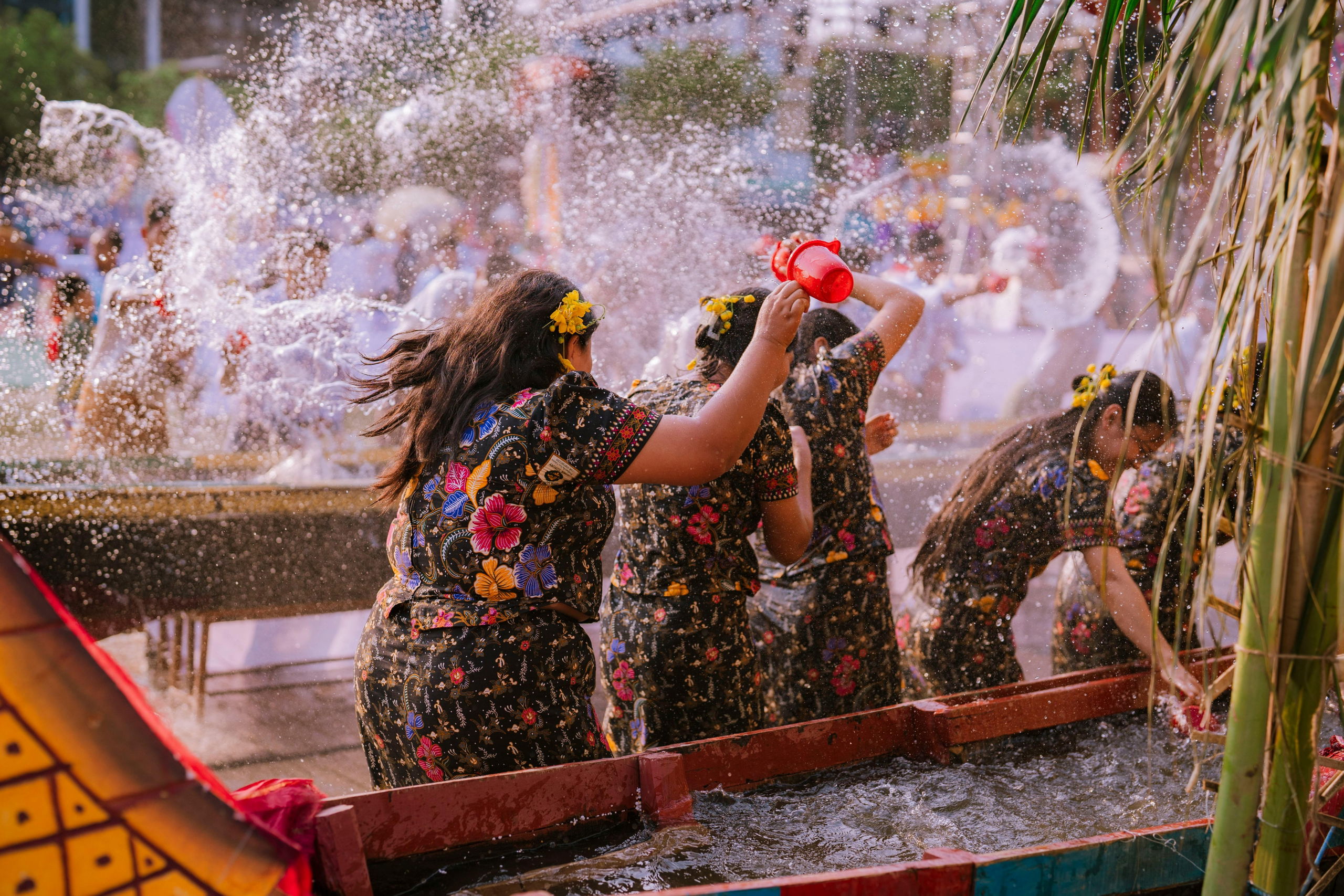
In mid-April, the heat settles over Thailand with a particular density. By early afternoon, the air in Bangkok hangs still between buildings, and in Chiang Mai the scent of jasmine garlands and grilled pork skewers drifts slowly through temple courtyards. It is the kind of heat that alters behavior as meals stretch later into the evening, mornings begin earlier, and movement slows to something more deliberate. Then, quite suddenly, the country changes.
Water appears everywhere. Along city streets and village roads, in alleyways and temple grounds, it becomes both gesture and language. A small silver bowl poured gently over the hands of an elder. A bucket tipped from the back of a pickup truck. A stream of cool water brushed across a Buddha statue, then across one’s own shoulders. This is Thai New Year, known locally as Songkran, and it arrives not as a single event, but as a sequence of rituals that move between reverence and release.
When is Thai New Year?
Thai New Year falls each year from April 13–15, though in practice the celebration often extends several days beyond, particularly in the north. The timing is not arbitrary. Songkran marks the sun’s passage into Aries, a moment of transition rooted in ancient astrological traditions that stretch across South and Southeast Asia.
It is a threshold. A pause between what has been and what is about to begin. And in Thailand, that transition is expressed through water.
The Meaning Behind the Water
To understand Songkran, it helps to step away from the images that tend to circulate internationally—crowded streets, water guns, and the kinetic energy of celebration—and begin somewhere quieter.
In the days leading up to April 13, homes are cleaned with intention. Dust is swept from corners, old items are discarded, and spaces are reset. This is not spring cleaning in the Western sense; it carries a symbolic weight. The act of clearing becomes a way of letting go of the previous year’s missteps, of preparing the home and the self for renewal.
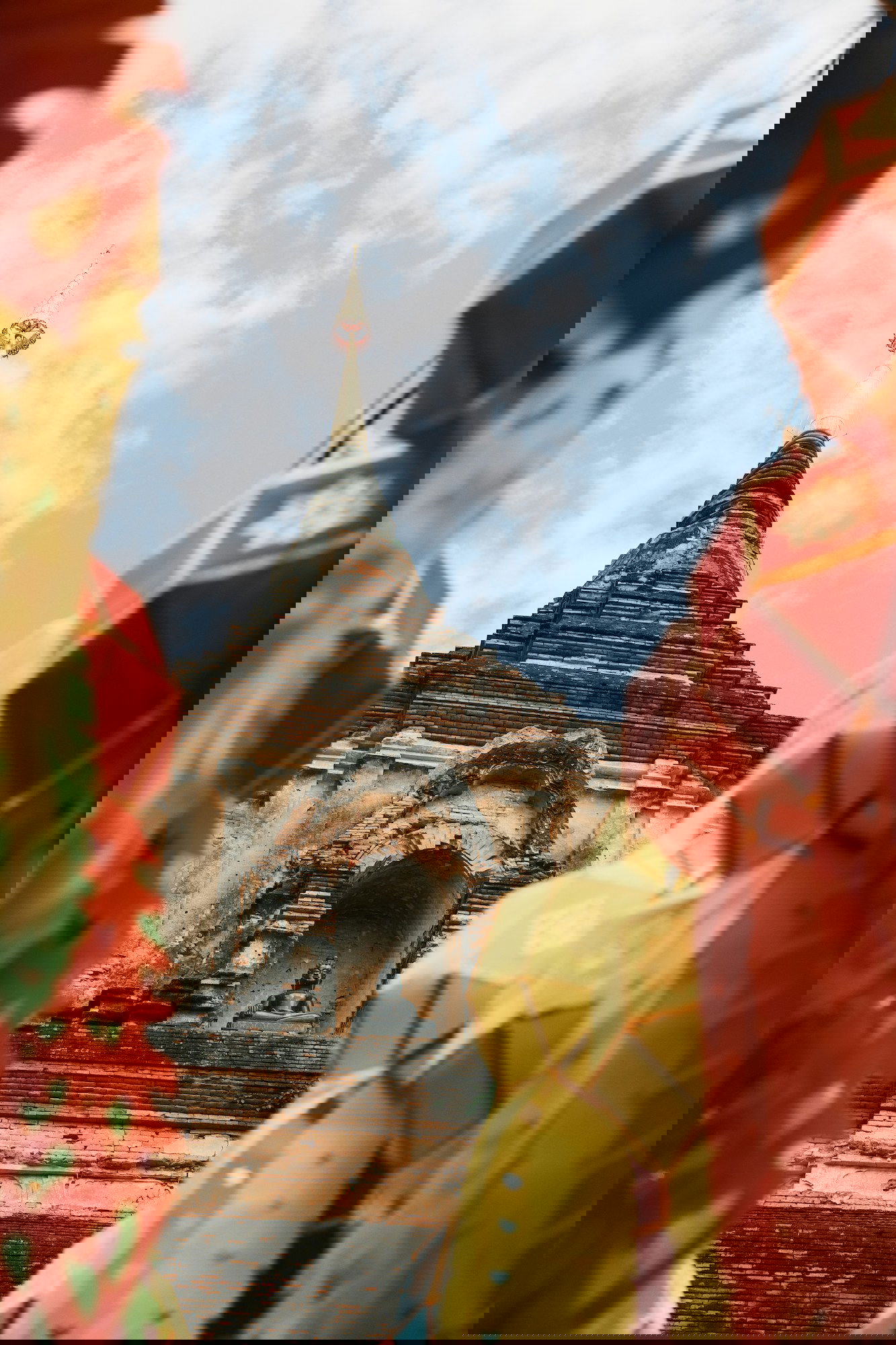
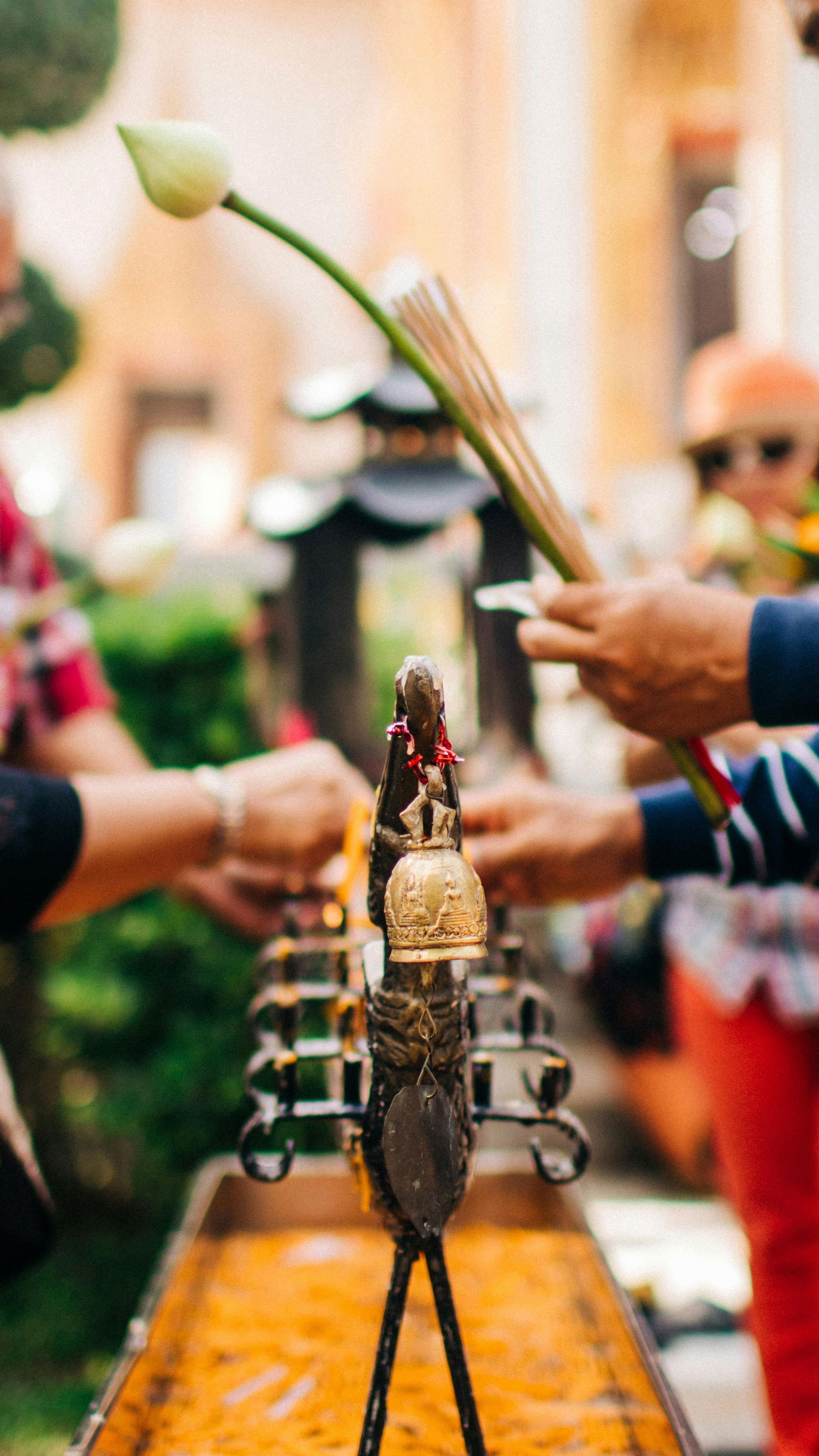
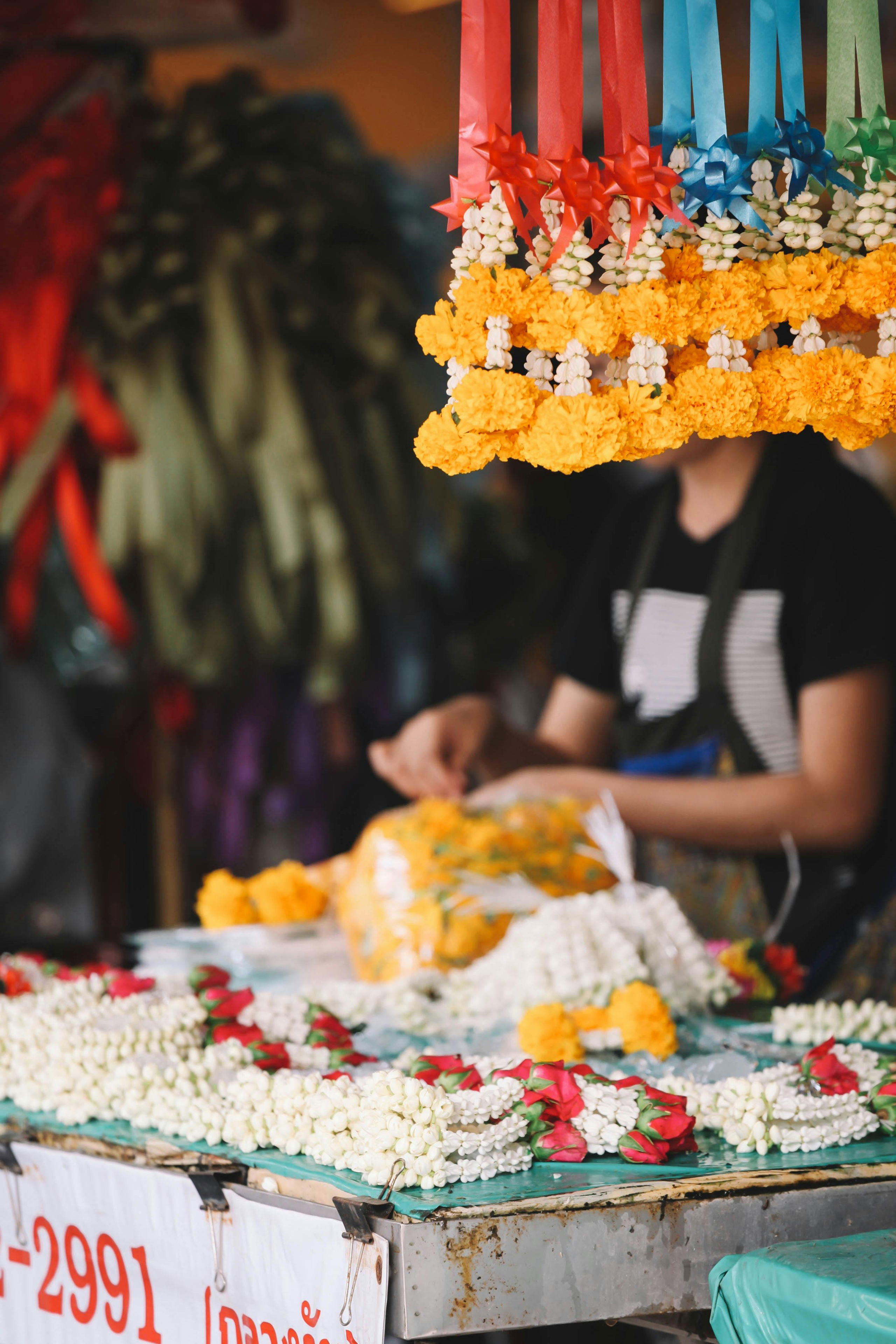
At temples, families gather with offerings: marigolds, incense, and bowls of rice. Buddha statues are carefully washed with scented water, often infused with petals or fragrant herbs. The water is poured slowly, over the hands, over the head, sometimes collected and saved as a blessing.
There is a specific gesture that appears again and again during these moments. Younger people kneel before elders and pour water over their hands, a sign of respect and gratitude. In return, elders offer a blessing, softly spoken and often accompanied by a touch to the head or shoulder.
This is the original language of Songkran. Water as cleansing. and connection.
From Ritual to Celebration
By midday on April 13, the tone begins to shift.
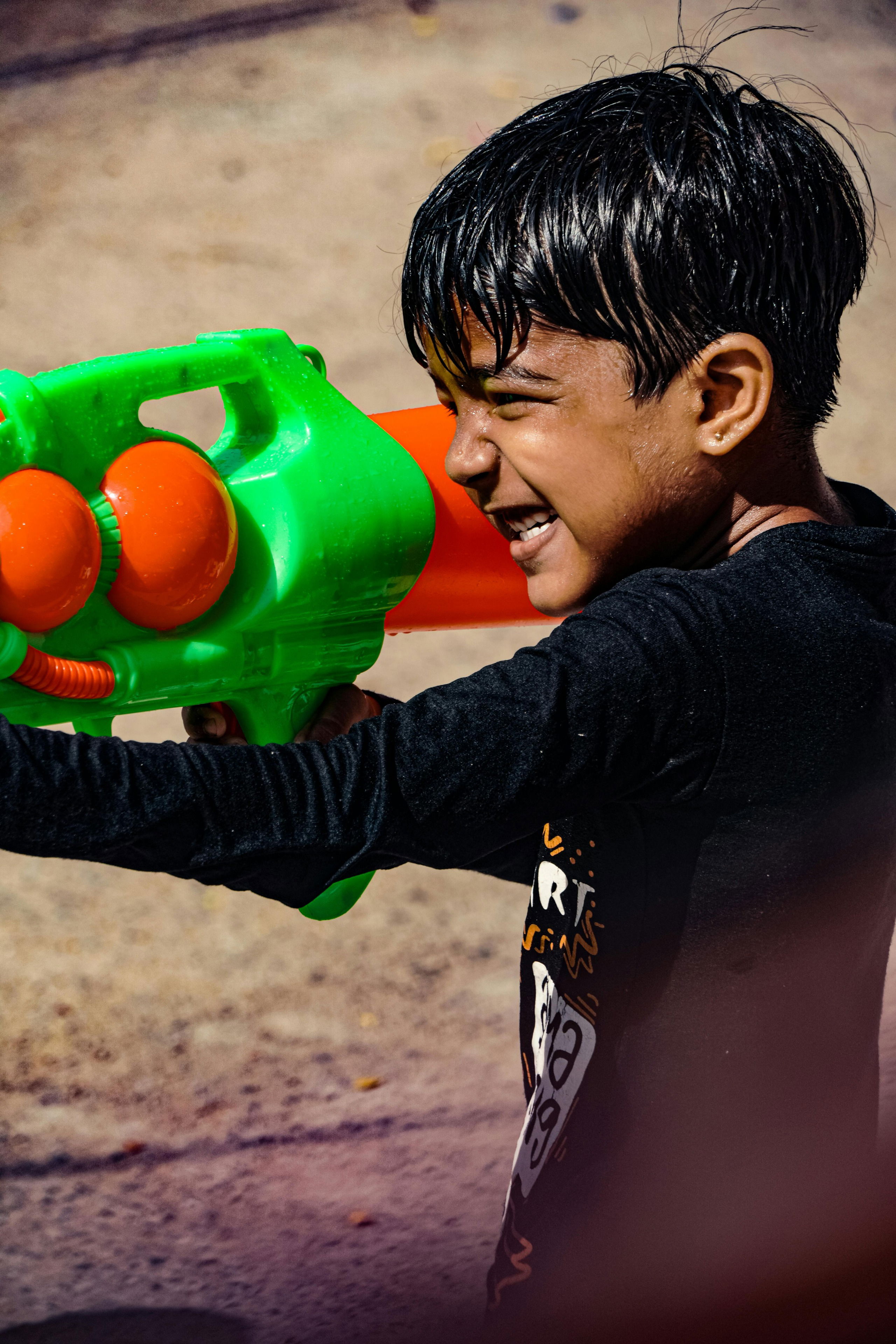
In cities like Bangkok, traffic gives way to something looser. Pickup trucks fill with groups of friends, barrels of water sloshing in the back. On Khao San Road, a narrow stretch that has become synonymous with Songkran, the density of the crowd transforms the street into a kind of moving current. Music filters through from open doorways. Ice is added to buckets, turning each splash into something bracing.
In Chiang Mai the old city is encircled by a moat, and during Songkran, it becomes both source and stage. Locals and visitors line the edges, dipping containers into the water and passing them along. The splashing feels less chaotic, more communal. There are pauses, moments where a vendor hands over a skewer of grilled sai ua sausage, or where a monk passes quietly through the crowd, untouched.
What appears, on the surface, as exuberance is still tethered to its origins. Even in the most animated scenes, the act of pouring water retains a trace of its earlier meaning. A gesture of goodwill. A wish for renewal.
.
The Regional Differences
Songkran unfolds differently depending on where you are.
- In Chiang Mai, the celebrations often last longer, with a strong emphasis on both temple rituals and community gatherings. Early mornings are quieter here. You might find locals walking barefoot along the streets, offering alms to monks as the first light settles over the city.
- In Bangkok, the energy builds quickly and disperses just as fast. Neighborhoods take on distinct personalities—some streets become informal gathering points, others remain subdued, with families focusing on traditional ceremonies at nearby temples.
- In the south, in places like Phuket or Krabi, the coastal setting shifts the atmosphere again. Water is already a constant presence here, and during Songkran, the line between festival and environment blurs. The sea, the air, the streets are all part of the same continuum.
The Food of Songkran
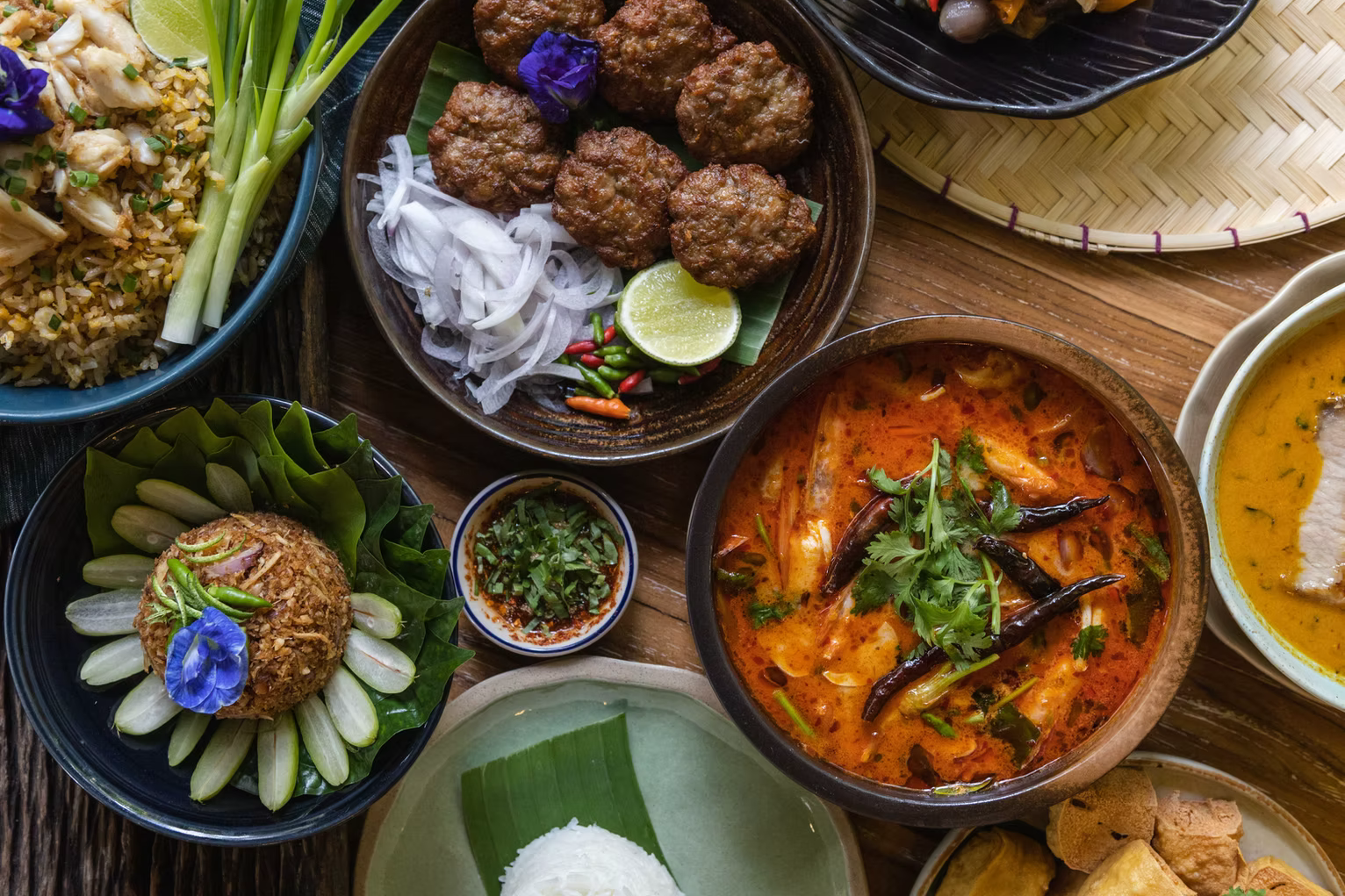
As with most Thai celebrations, food is not a backdrop. It is a central expression of the moment. In the heat of April, meals lean toward contrast. Something cool against something spicy. Something crisp alongside something slow-cooked.
There is khao chae, a dish traditionally associated with the season. Rice is soaked in chilled jasmine-scented water, often served with a selection of accompaniments: shredded sweet pork, stuffed shallots, small fried shrimp paste balls. The effect is subtle. Fragrance, texture, and temperature all working together to offer relief from the midday heat.
Street vendors continue their steady presence. Grilled chicken brushed with turmeric and garlic. Papaya salad pounded to order, lime and fish sauce cutting through the richness of the day. Fresh coconut water, poured directly from the shell, becomes less of a choice and more of a necessity.
Meals during Songkran are often shared in fragments. Standing at a stall, sitting briefly at a low table, and returning to the movement of the street. Eating becomes part of the rhythm of the day rather than a pause from it.
A Festival Seen from Within
To arrive in Thailand during Songkran is to step into something already in motion.
The experience depends, in part, on how you choose to enter it. There are those who move directly into the center of the celebration, drawn by the scale and energy. And there are those who begin elsewhere.
A temple courtyard in the early morning, before the streets fill. The sound of water being poured, quietly, over stone. The scent of incense rising in thin lines through the air. A conversation with a local guide who explains not just what is happening, but why it matters.
From there, the day unfolds.
A walk through a market where vendors have adjusted their offerings for the season with more chilled dishes, more fresh herbs, more emphasis on balance. A shared meal that stretches slightly longer than planned, because the heat encourages it. An afternoon where the streets come alive, and the distance between observer and participant disappears.
This is where the festival becomes legible. Not as spectacle, but as a layered set of practices that hold both past and present at once.
Traveling with Context
Songkran is often described as a water festival. The phrase is accurate, but incomplete. What becomes clear, with time and context, is that the water is only one part of a broader system of meaning. The gestures, the timing, the specific foods, and the way different regions interpret the same set of traditions shape the experience in ways that are not immediately visible.
Traveling with a deeper understanding allows the moments to land differently. A bowl of water passed between hands carries weight. A meal prepared for the season feels intentional. A conversation about the origins of the festival connects what you are seeing to something much older, and more enduring. This is where Thailand begins to reveal itself comes to life through a series of observations that accumulate over time.
A Different Way of Marking Time
At its core, Thai New Year is about transition. Not in the abstract sense, but in ways that are physical and visible. Water poured over skin. Dust swept from a room. Rice cooled and scented for a particular season. These are small acts, repeated across households and communities, that together create a shared sense of renewal.
For travelers, the invitation is not simply to witness these acts, but to understand their place within a larger rhythm. To travel to Thailand during Songkran is to see how a culture marks time not just through calendars, but through practice. Through food, through ritual, through the quiet exchange between generations.
And for those drawn to travel that carries this kind of depth, Thailand offers something that extends well beyond a single festival. It offers a way of paying attention.