
Art Travel for People Who Want to Know How Things Are Made
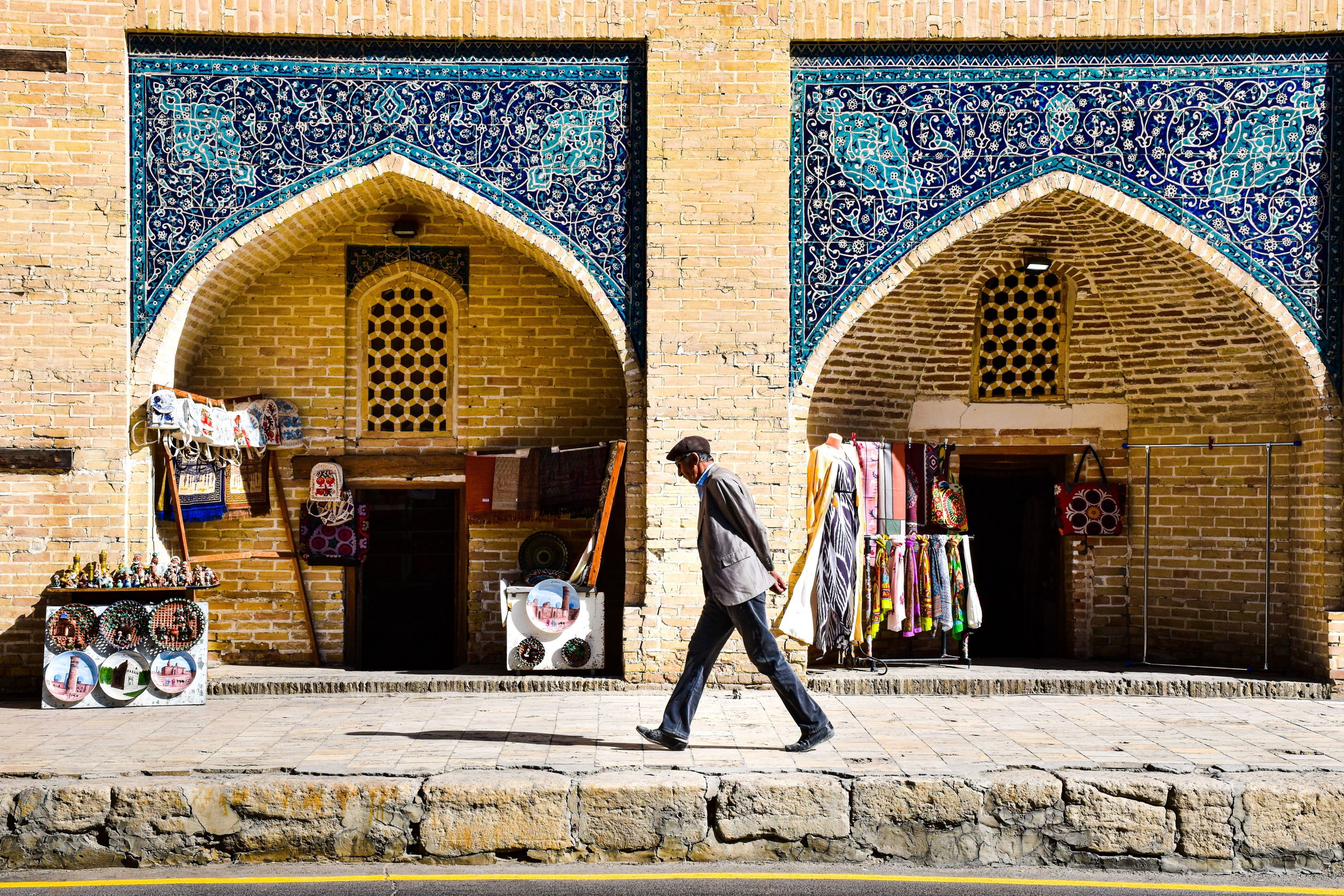
Pick up a handwoven textile in Oaxaca and the finished object tells you almost nothing about the work that preceded it. Before there was pattern, there was wool. Before color, cochineal, indigo, and plants were prepared for dye. Someone understood what those materials would do before the loom ever entered the story. Pull on that thread and an entire place opens.
This is one way we think about art travel: begin with an object, then work backward until you understand the landscape, trade routes, rituals, technologies, and people that made it possible. Instead of treating textiles, ceramics, furniture, or decorative arts as souvenirs encountered at the end of a trip, the making process becomes part of the journey itself. Travelers meet artisans, enter working studios, learn the history of regional materials, and see how traditional techniques continue to evolve.
The object is the beginning of the story and where we begin crafting private travel.
Why art travel tells us so much about a place
Materials are rarely accidental. Clay changes from one valley to another. Wood reflects the forests surrounding a community. Textile traditions follow the movement of plants, insects, animals, trade, and people.
Then human knowledge intervenes.
Someone learns that birch can bend without breaking. Someone discovers precisely how thin gold can become. Someone binds silk threads in anticipation of a pattern that doesn’t fully exist yet. The result might eventually sit on a shelf in a beautiful shop. We’d rather see what happened before it got there.

Japan: Gold, clay, lacquer, and silk
A craft-focused Japan itinerary could easily begin in Kyoto, where making and daily ritual have been intertwined for centuries.
Kiyomizu ware developed alongside practices including tea ceremony and flower arranging, while Kyoto’s textile traditions include Kyo Yuzen dyeing and Nishijin weaving. A ceramic cup becomes more interesting when you’ve considered the tea it was designed to hold and the gestures it was made to accommodate.
Then take the train north to Kanazawa. Under the Maeda family, rulers of the Kaga domain, the city became an important center for artisans. That legacy remains visible in Kaga Yuzen silk dyeing, Kutani ceramics, lacquerware, metalwork, and gold leaf. Gold provides an especially compelling way into the story.
Kanazawa now produces 99 percent of Japan’s domestic gold leaf. The material is beaten to around 1/10,000th of a millimeter, thin enough that a piece of gold roughly the size of a coin can become a sheet the size of a dining table. That is the difference between seeing a gold-leaf object and understanding one.
A trip might move between specialist workshops, museums, contemporary designers, and the artisans still painting Kaga Yuzen silk by hand. In the process, “Japanese craft” stops being a broad aesthetic category and becomes a collection of highly particular materials, techniques, and regional histories.
Oaxaca, Mexico: Wool, clay, and color
In Teotitlán del Valle, you can hear the work before you see it.
Wooden looms sound from workshops throughout this Zapotec community in Oaxaca’s Central Valleys, where artisans produce wool textiles using both historic motifs and contemporary designs. Natural pigments can include cempasúchil for yellow, cochineal for red, and indigo for blue.
Spend time with a weaving family and a rug stops being a flat composition of pattern and color.
Wool must be prepared. Dye must be coaxed from unexpected sources. Cochineal, the tiny scale insect responsible for some of Oaxaca’s remarkable reds, changes as it is crushed and mixed. Threads are dyed before they are arranged across a loom.
Then there is clay. In San Bartolo Coyotepec, pottery remains central to community life. Local barro negro pieces are formed from nearby clay, shaped and dried, then burnished and decorated using tools that can be as simple as quartz stones, thorns, or pointed implements.
A craft-led Oaxaca journey can move between these communities and Oaxaca City, where contemporary artists and designers continue to reinterpret regional traditions. The question isn’t simply, “What should I buy?” It’s, “Why is this made here?”
Uzbekistan: Silk before there is pattern
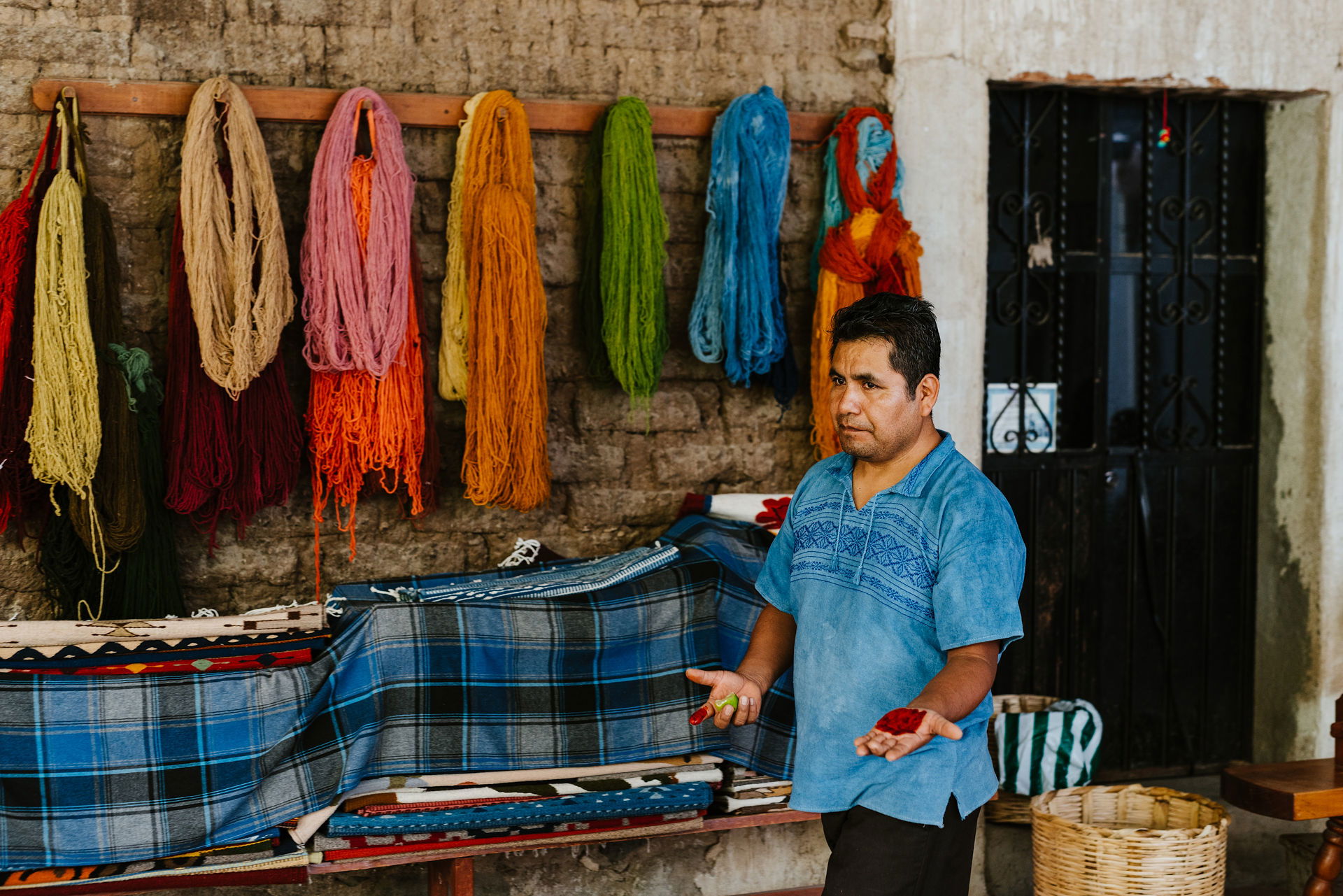
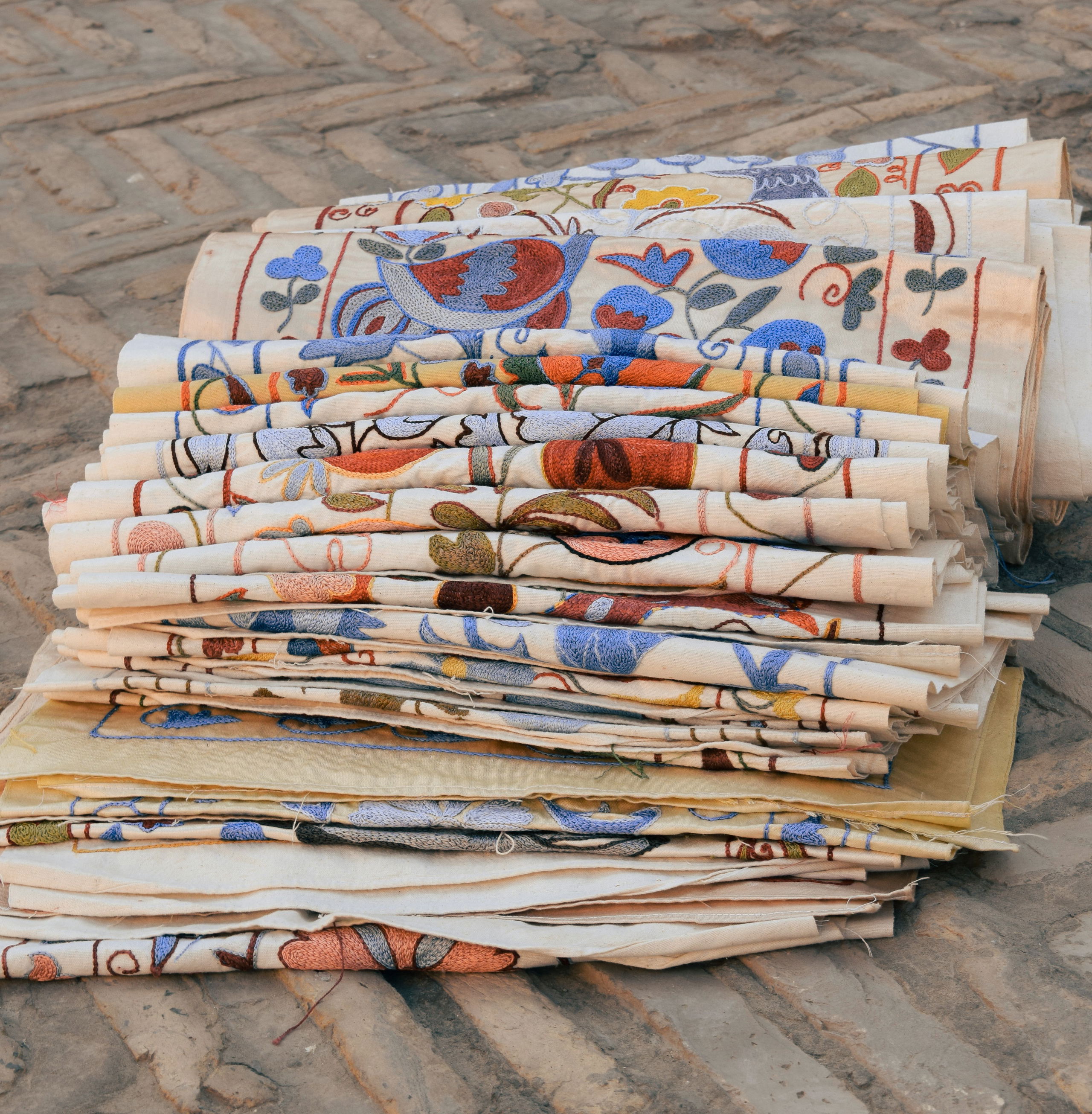
In Margilan, the design can exist before the fabric does. The city in Uzbekistan’s Fergana Valley has long been a center for atlas and adras textiles. Their ikat tradition uses resist-dyed threads: bundles are tied and dyed before weaving, meaning color and pattern have already been planned before those threads meet on the loom. That reversal is almost magical to watch.
Atlas is traditionally silk; adras combines silk and cotton. Their blurred, almost cloud-like patterns emerge from the slight shifts that happen when prepared threads are woven together.
Margilan’s relationship with the craft has survived significant disruption. Traditional handmade techniques were threatened during the Soviet period, and a local Crafts Development Centre was established in 2007 to support their preservation and transmission. UNESCO selected the initiative for its Register of Good Safeguarding Practices in 2017.
A textile-focused journey through Uzbekistan could pair Margilan’s working looms with the architecture and decorative arts of Samarkand and Bukhara.
Silk becomes the thread connecting them.
.
Morocco: Earth becomes architecture
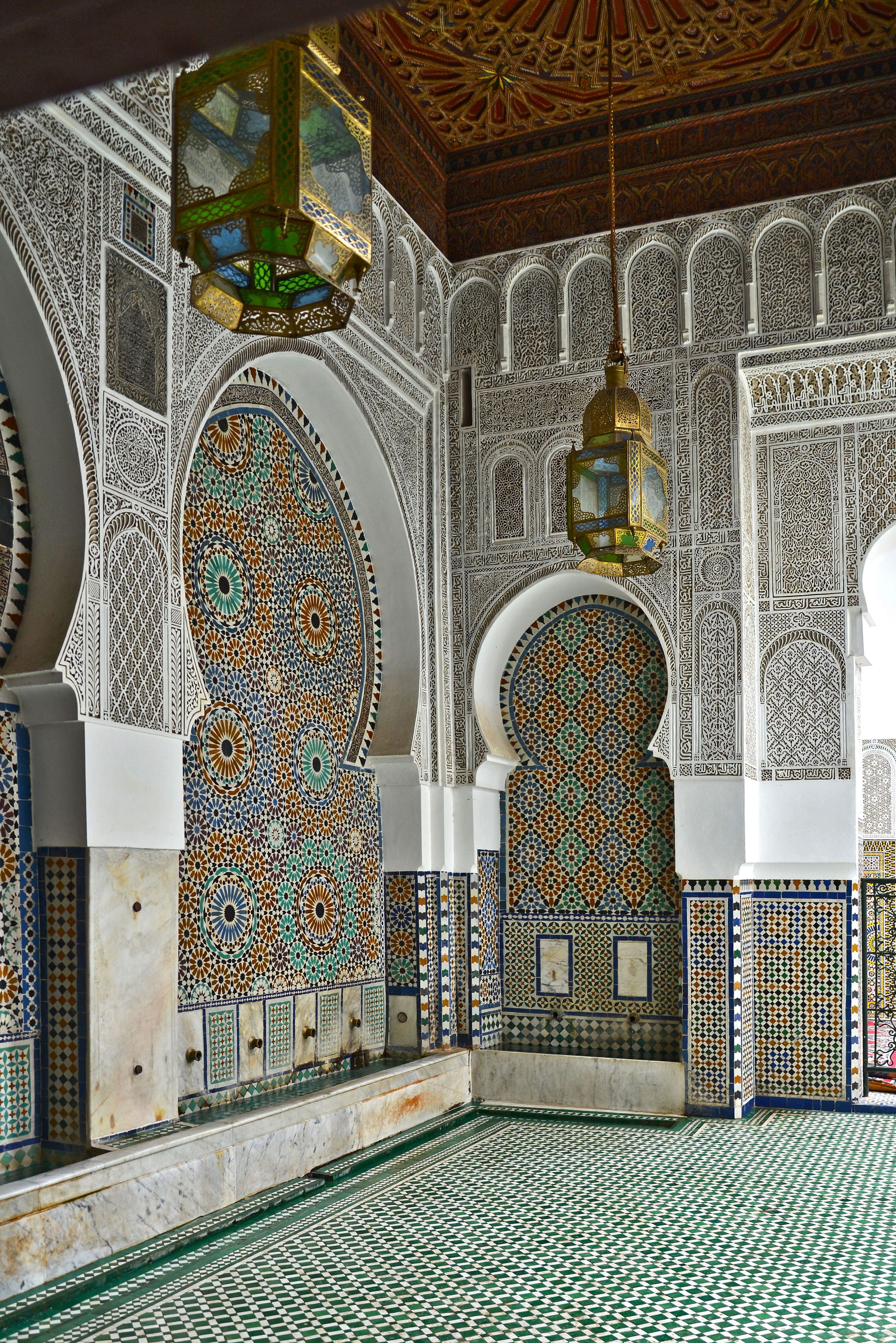
Zellige begins with clay. It is fired, glazed, cut into small geometric pieces, and assembled into compositions that cover fountains, floors, courtyards, and walls.
The technique rose to prominence under Morocco’s Marinid dynasty in the fourteenth century, and Fez remains particularly associated with its production.
Seen from across a riad courtyard, zellige can appear almost mathematically perfect. Stand beside the person making it and the precision becomes something else.
Each small shape has been worked individually. Pieces are arranged face down before being joined into the larger pattern. Variation in mineral pigment, firing, and light means supposedly identical colors can behave differently.
A journey from Fez to Marrakech might follow clay into zellige before branching into leather, metalwork, carved plaster, and textiles. Instead of “Moroccan design,” you begin to see separate practices and the hands behind them.

Venice: Glass and the survival of a living craft
On Murano, the material is molten. Venetian glassmaking developed through centuries of exchange, including important early connections with sophisticated glass traditions in Syria and the broader Middle East. By the fourteenth century, Venice had become a major center of glass production; in the fifteenth, Murano glassmaker Angelo Barovier became associated with the development of exceptionally clear cristallo glass.
Today, Murano presents a fascinating question for anyone interested in craft:
What happens when a living tradition also becomes a luxury brand?
A thoughtful visit should move beyond a demonstration staged around a showroom. The island’s Glass Museum traces centuries of Murano production, while workshop visits can reveal how contemporary makers negotiate inherited techniques, experimentation, and a global market hungry for the word “Murano.” The furnace is only the beginning.
.
Finland: Wood as a design philosophy
In Finland, follow the birch. Alvar Aalto and cabinetmaker Otto Korhonen began experimenting with wood-bending techniques in the late 1920s, looking for ways to make radically modern furniture from a material intimately connected to Finland.
Their experiments eventually produced Aalto’s famous L-leg: solid birch cut with narrow slits, reinforced with veneer, and bent to ninety degrees.
That single technical solution became the foundation for stools, chairs, benches, and tables.
The lesson extends beyond furniture.
Finnish wood provides a way into larger conversations about architecture, forests, industrial production, modernism, and the relationship between useful objects and everyday beauty.
Visit Aalto’s buildings. Sit in the furniture. Look at the forests outside the windows. Material and philosophy begin to meet.

How we’d design a trip around a craft you love
We’d start with the obsession. Maybe you collect ceramics. Maybe you know the difference between linen and ramie by touch. Maybe you’ve spent years looking at furniture joints. Maybe you simply bought a textile once and still wonder how someone made it. That is enough.
A ceramics journey could lead through kilns, geology, tea traditions, archaeological collections, and contemporary studios. A textile trip might connect farms and dye plants with fashion archives and family workshops. A furniture journey could move between forests, architects’ homes, factories, and design museums. The destination comes second. Curiosity determines the route.
Frequently asked questions about art travel
Where are some of the best destinations for traditional crafts?
Japan, Mexico, Uzbekistan, Morocco, Italy, and Finland all offer particularly rich opportunities to understand regional craft traditions in context, although the right destination depends on the material or technique that interests you.
What are good destinations for textile lovers?
Oaxaca’s Central Valleys, Kyoto and Kanazawa in Japan, and Uzbekistan’s Fergana Valley offer very different textile traditions with strong connections between material, technique, and regional identity.
Where can travelers learn about ceramics?
Oaxaca and Kyoto are two strong starting points. Kyoto’s Kiyomizu ware developed in close relationship with tea culture, while communities around Oaxaca preserve distinctive regional pottery traditions.
Can a private trip include working artist and artisan studios?
Yes, where artists and makers welcome visitors and appropriate arrangements can be made. The most valuable visits tend to prioritize conversation and context rather than treating a working studio as a tourist attraction.
How do you visit artisans respectfully?
Choose visits developed with the maker’s participation, respect restrictions around photography and proprietary techniques, compensate people appropriately for their time, and approach the experience as an opportunity to learn rather than simply shop. The beautiful object can come home with you. The better souvenir is knowing how to look at it. Tell us what you collect, make, or can’t stop thinking about. We’ll start there.


